
Push-Up Bars Comparison Tool
1Pick the push-up bars to compare
Affiliate links: as an Amazon Associate, FitGearHQ earns from qualifying purchases at no extra cost to you. Rankings come from our FitScore method, not from commissions.
Free tool · Updated November 5, 2026
Put any two push-up bars side by side
Pick two or three models we rank, choose how you will use them, and see every key spec and the FitScore for that use, with the better value of each row highlighted.
Short answer
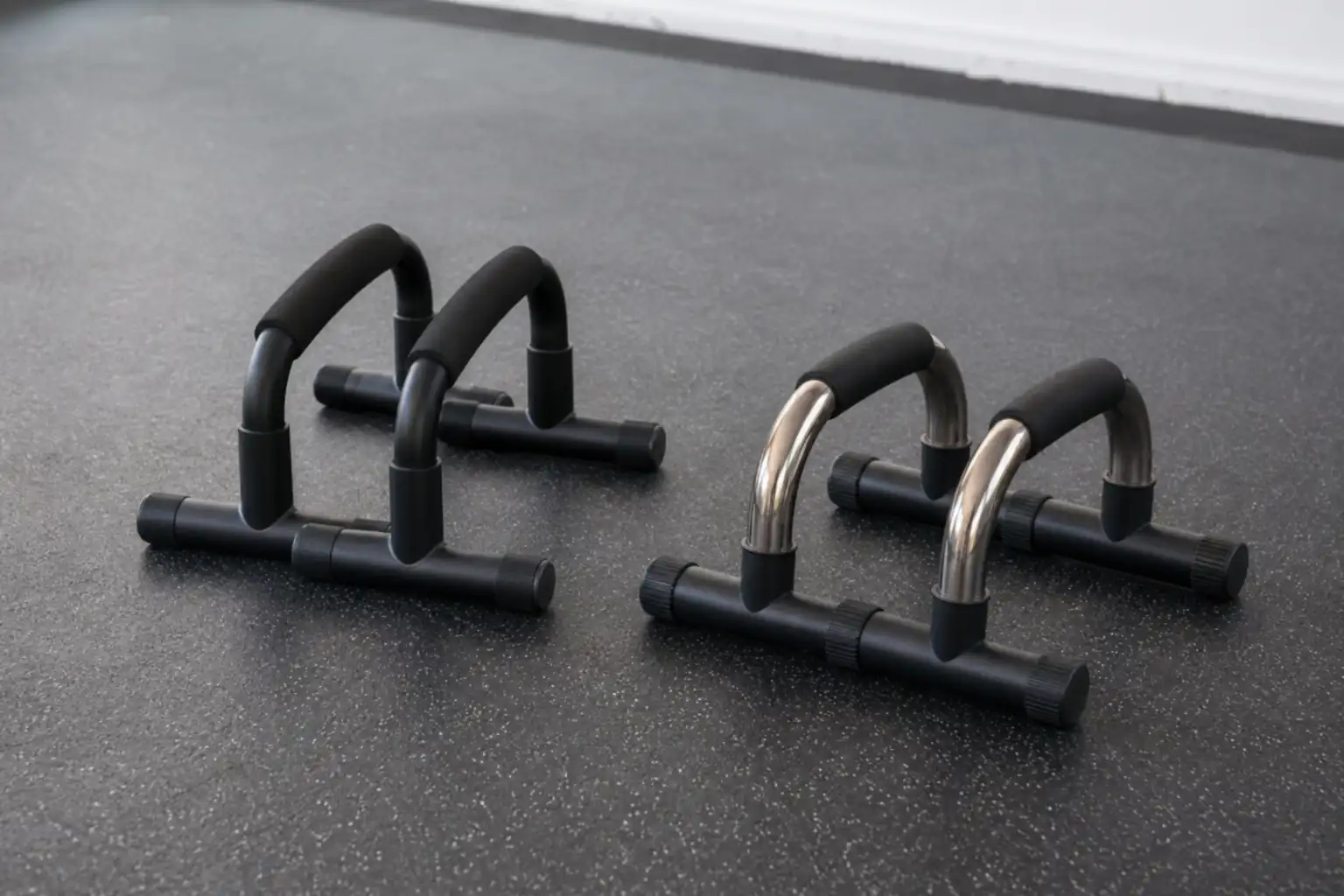
Choose two or three push-up bars and how you will use them. The tool lines up every key spec, highlights the better value in each row and shows which model scores higher for that use.
Key takeaways
- Compare push-up bars on the specs that change the workout: the height, the handle thickness and the stated capacity.
- A taller bar gives a deeper range of motion; a thicker handle fills the hand.
- The better value in each measurable row is highlighted only when one pair is clearly ahead.
- A higher stated capacity wins.
Product pages list specs in different orders, so this tool puts them on one grid.
How to Read the Push-Up Bars Comparison
Each row tells you something different about how the push-up bars will feel and fit at home. Read the warranty row with care: the FTC warranty guide notes that a warranty can cover parts but not labor. For the research behind this category, see the U.S. Physical Activity Guidelines for Americans and the CDC adult physical activity guidelines.
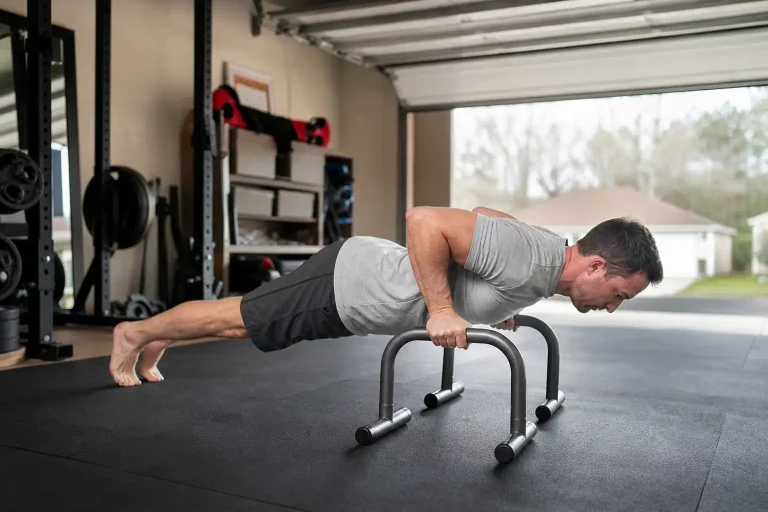
- Height: parallettes stand 5 to 14 in high, and low push-up handles stand 3 to 5 in; see push-up bar size guide.
- Capacity and frame: the stated weight limit in pounds and whether the frame is steel or solid wood.
- Handles or parallettes: low handles suit push-ups, and raised bars suit dips, L-sits and handstands; see parallettes vs push-up handles.
- Grips and feet: padded or wooden grips decide how the hold feels, and non-slip feet keep the bars planted.
- FitScore: our 0 to 100 score, read from our scoring table. See how we score.
Our In-Depth Push-Up Bars Comparisons
These match-ups have a full article with the verdict by use and our sources. The quick view opens them in the tool.
| Comparison | Quick viewSpecs |
|---|---|
| airogym Wooden Parallettes with Metal Brackets 5.9 in vs Fit4Fun Wooden Parallettes 6.1 in with Metal Brackets | Compare specs |
| Teclor Steel Push-Up Bars 9.5 in with Foam Grips vs TABEKE Steel Push-Up Bars 14 in with Foam Handles | Compare specs |
Share, Embed or Cite This Tool
Link to the page from a forum thread or your site. The embed code adds a card with a visible link.
Share this tool
Send it to a friend, a training partner or your followers. These buttons share the tool itself, not your results.
Embed the interactive tool
For websites and blogs. Paste this code where you want the tool: your visitors use it right on your page. It resizes itself and shows a credit link to FitGearHQ.
Add a link card
For blogs, newsletters and pages that do not allow scripts: a clean card with a picture and one link.
Cite this tool
- TitlePush-Up Bars Comparison Tool
- PublisherFitGearHQ
- URLhttps://fitgearhq.com/push-up-bars-comparison-tool/
- Updated
More Free Push-Up Bars Tools
See them all on Fitness Calculators, compare push-up bars or browse every free fitness tool.
Checklist Before You Choose
4 checks
Tap a number to check off that step.
- 01
Pick the heightLow handles for push-ups; 9 to 14 in bars for dips, L-sits and handstands.
- 02
Pick the materialSteel for the highest stated capacity; wood for a warmer, drier grip.
- 03
Check the gripsPadded or wooden, with non-slip feet.
- 04
Check the extrasDip use, adjustable height or a detachable build if you want them.
Common Mistakes to Avoid
Mistake 1Choosing too tall too soon
Instead: Start with a bar at or below 10 in if you are new to dips and L-sits.
Mistake 2Ignoring the floor
Instead: Use the bars on a flat, firm floor or a mat so the feet stay planted.
Mistake 3Overlooking the wrist angle
Instead: Keep the wrists straight over the handles and stop if they hurt.
Mistake 4Skipping the warm-up
Instead: Warm up the wrists, elbows and shoulders first.
The Bottom Line
- 19 in-stock push-up bars to compare.
- 7 specs per model, plus the FitScore for 3 uses.
- 2 in-depth comparisons linked when you pick one of those pairs.
- Shareable links keep your selection.
Frequently Asked Questions
Line up the height, the handle thickness, the capacity and the grips, then weigh them by how you will train. The tool does this for you.
The height and the frame first, then the stated capacity and the grips.
Yes, side by side; see our parallettes vs push-up handles guide for the trade-offs.
Yes. Any two or three pairs in our rankings can go side by side.
No. The comparison uses our data and FitScore method. Links to Amazon are affiliate links.
Explore Our Push-Up Bars Guides
Best Push-Up Bars (2026): 5 Pairs Ranked
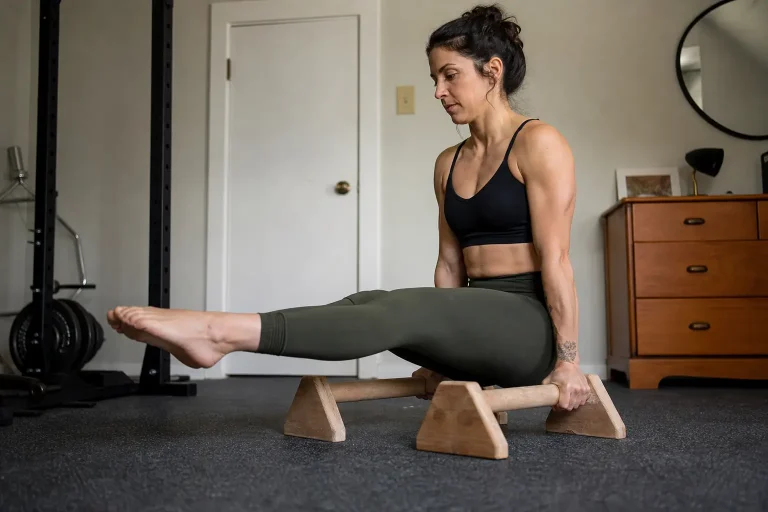
Best Wooden Parallettes (2026): 5 Pairs Ranked
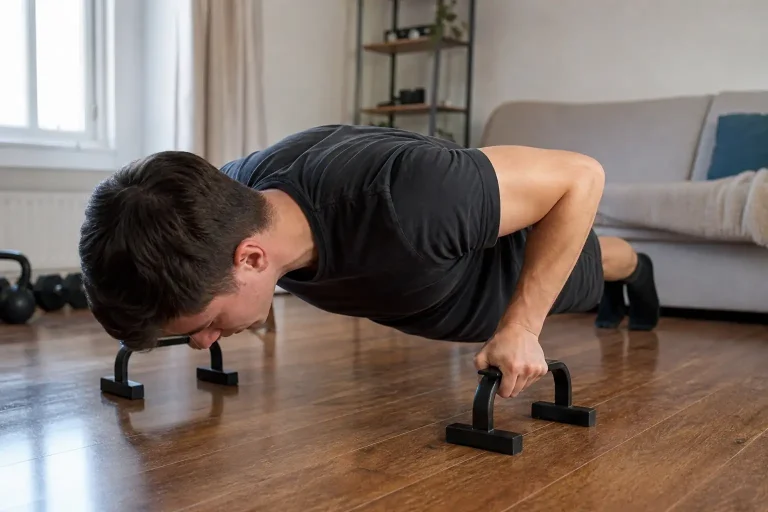
Best Push-Up Handles (2026): 5 Pairs Ranked
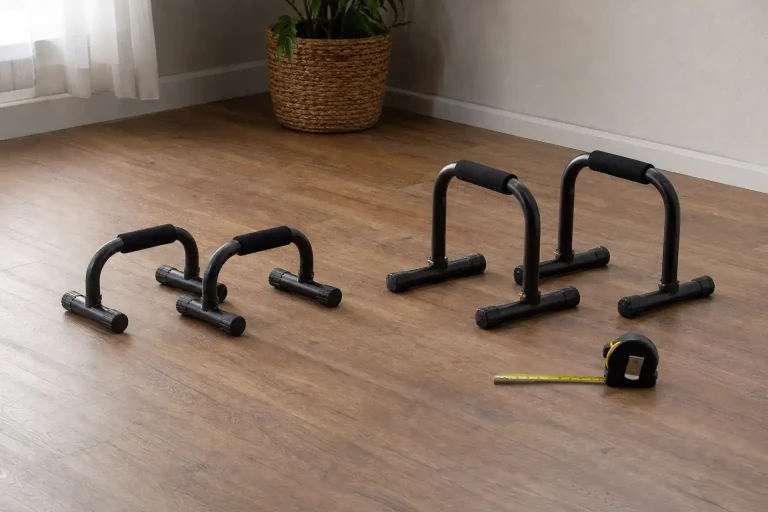
Push-Up Bars Size Guide (2026): Which Height to Choose
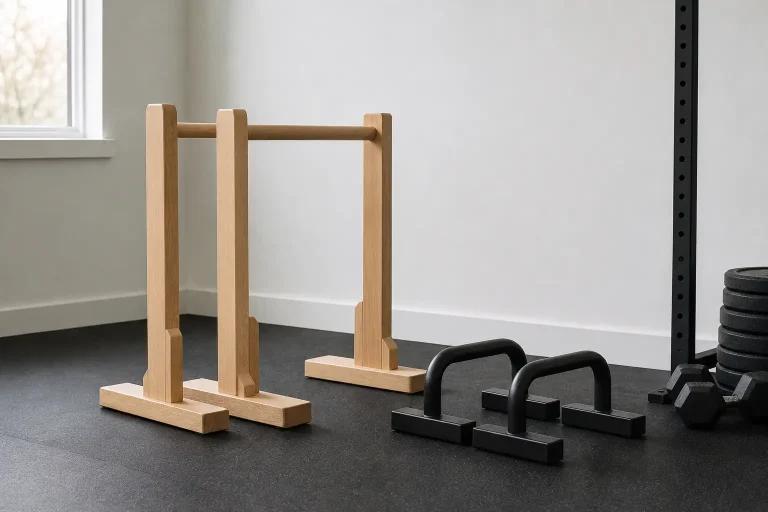
Parallettes vs Push-Up Handles (2026): Which Should You Buy?