

Short answer
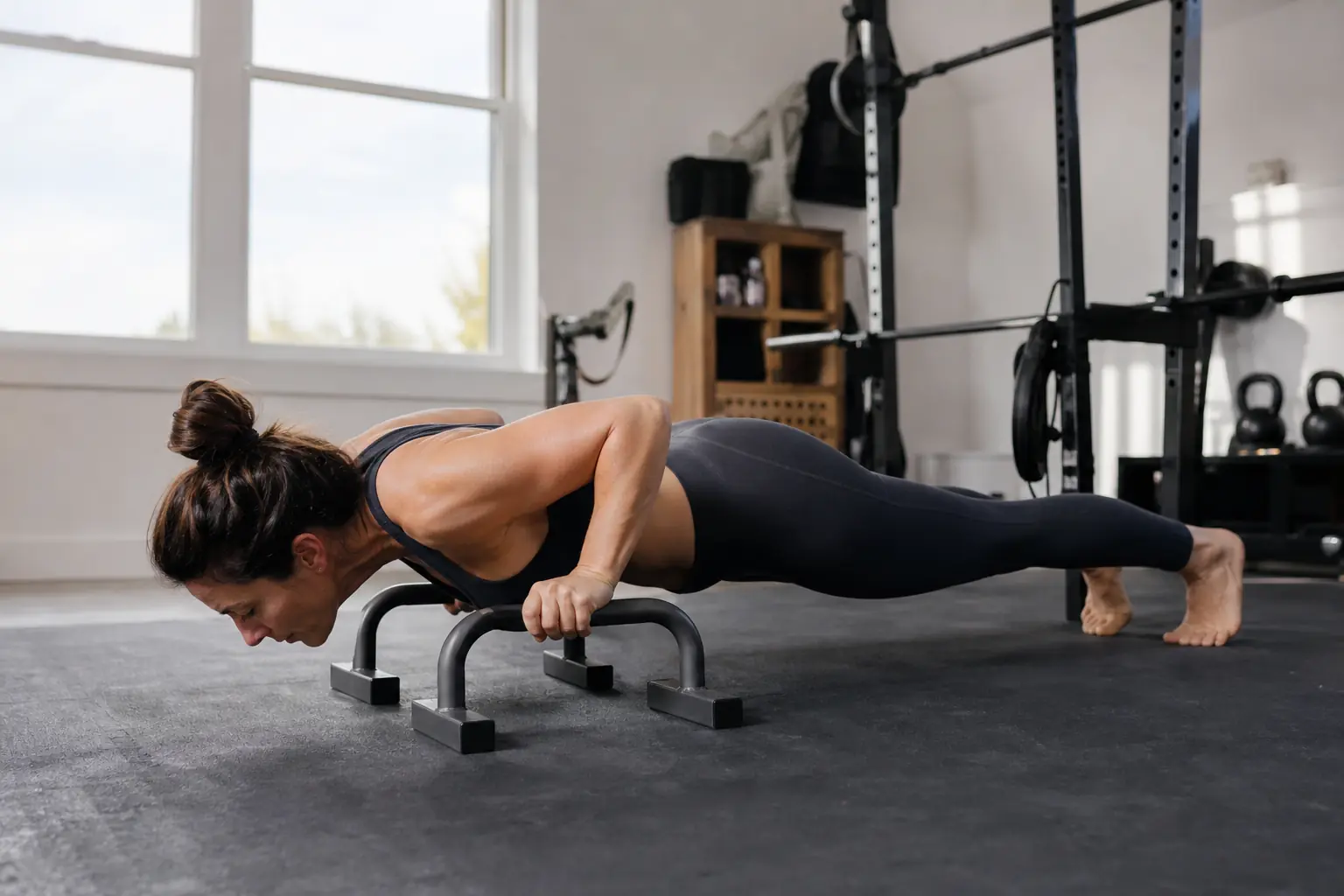
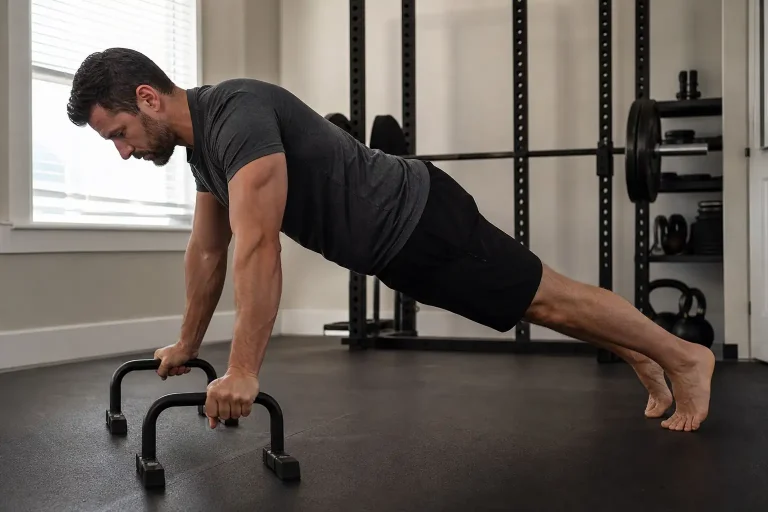
Push-Up Bars Workouts: Start with deep push-ups on the bars, 3 sets of 6 to 8 with a minute of rest, then add L-sit holds and dips as the shoulders get used to the range. Slow reps and straight wrists beat extra reps.
Key takeaways
- Short, slow sets beat long, sloppy ones.
- Bar height sets which moves you can do.
- Check the floor and the bars before every session.
To pick a pair, see our best push-up bars guide.
Before You Start
Warm up for 5 minutes with wrist circles, arm circles and a few easy push-ups from the floor. Place the pair on a flat, firm floor, shoulder-width apart, and press down on each bar before you load it.
- Wrists: keep them straight over the handles and build the depth a little at a time.
- Level: both bars should sit evenly, on a mat if the floor is slick.
- Volume: two or three sessions a week is enough for most people; stop a set when the form fades.
5 Push-Up Bars Workouts
Keep most of your week easy and add one harder session; a second only when the first feels fresh.
| Workout | Structure | Level |
|---|---|---|
| Push-up starter | 4 sets of 8 push-ups on the bars with a slow lower, rest 60 seconds, then 3 sets of 20-second plank holds on the handles | Beginner |
| Deep push-up builder | 4 sets of 6 push-ups with a 2-second pause at the bottom, rest 60 seconds, then 3 sets of 10 slow negatives | Beginner |
| L-sit session | 5 sets of a 10-second L-sit with bent knees, rest 60 seconds, then 3 sets of 6 tuck raises | Intermediate |
| Core day | 3 rounds of 8 leg raises, 10 body saws and 20 seconds of hollow hold, rest 60 seconds | Intermediate |
| Full-body circuit | 4 rounds: 8 push-ups, 8 dips on taller bars, 10-second L-sit, 30 seconds of plank, rest 90 seconds | Advanced |
Check Amazon for current pricing and availability.
How to Progress
Make a move harder only when the whole set stays clean. Bars add depth to every rep, so earn each new level with steady sets at the old one.
- Add depth slowly: lower a little further each week, not all at once.
- Quality over reps: end the set when the wrists bend or the shoulders round, not when the count is done.
- Step back: return to the floor or an easier hold if the wrists or shoulders complain.
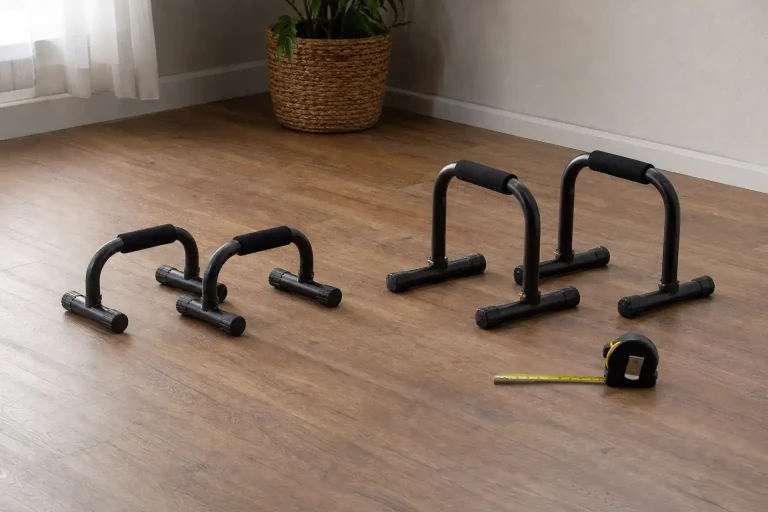
Pro tip: Unsure which bar height fits your moves? See the push-up bars size guide.
Weekly Plan
A simple week for most people: one push-up session, one L-sit or dip session and one core session. Total time matters more than any single workout, and the CDC activity guidelines give the weekly target.
- Day 1: the deep push-up builder.
- Day 3: the push-up starter or the L-sit session.
- Day 5: the core day or the full-body circuit, only if you are fresh.
Push-Up Bars Worth a Look
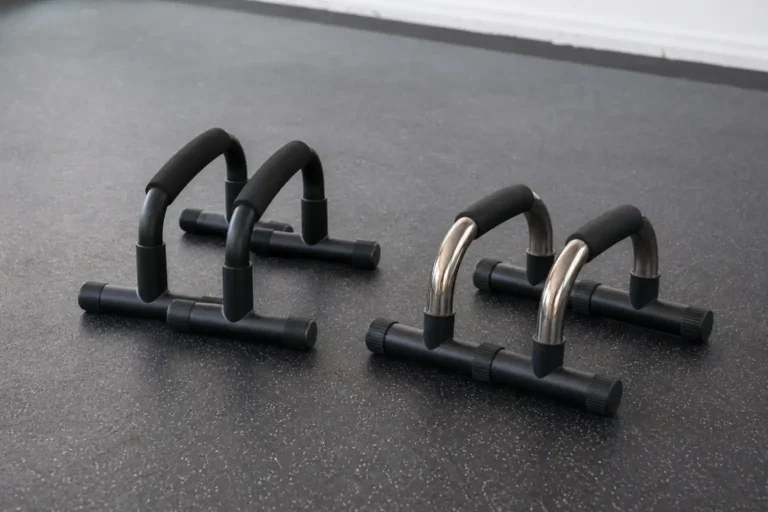
A tall steel pair, a wooden pair and a low set of handles.
Check the warranty terms before you buy: the FTC explains how to read a product warranty.
Tall steel pair

TABEKE Steel Push-Up Bars 14 in with Foam Handles
FitScore 62.3/100
14 in steel parallettes with 1.5 in foam handles and a 660 lb stated capacity. Ranked #1 in our best push-up bars guide, FitScore 62.3 for that intent.
Check Price on AmazonWooden pair

Fit4Fun Wooden Parallettes 6.1 in with Metal Brackets
FitScore 53.4/100
6.1 in beech parallettes with metal brackets, 1.6 in handles and a 550 lb stated capacity. Ranked #1 in our best wooden parallettes guide, FitScore 53.4 for that intent.
Check Price on AmazonLow handles

Fitarc Steel Push-Up Handles with Rubber Grips
FitScore 49.6/100
3.3 in steel handles with rubber grips, anti-slip feet and a 660 lb stated capacity. Ranked #1 in our best push-up handles guide, FitScore 49.6 for that intent.
Check Price on AmazonChecklist Before Your First Push-Up Bars Workout
6 checks
Tap a number to check off that step.
- 01
Warm up for 5 minutes.
- 02
Place the pair on a flat, firm floor.
- 03
Keep the wrists straight over the handles.
- 04
Pick a depth you can control.
- 05
Plan short sets with a minute of rest.
- 06
Stop if a wrist or shoulder hurts.
Common Mistakes to Avoid
Mistake 1Starting with deep reps before the wrists are ready.
Mistake 2Using the pair on a soft or uneven floor.
Mistake 3Skipping the warm-up for the wrists.
Mistake 4Letting the bars sit unevenly.
Mistake 5Chasing reps while the shoulders round forward.
The Bottom Line
- Most bar work is 3 to 4 sets of 5 to 10 reps, because the extra depth makes every push-up harder than it looks.
- Bar height sets the moves: low bars suit push-ups and handstands, and taller bars give room for L-sits and dips.
- Set the pair on a flat, firm floor and check that both bars are level before every session.
- Adults are advised muscle-strengthening activity on at least 2 days a week, plus 150 minutes of moderate activity.
Our Top Picks
 Tall steel pairTABEKE Steel Push-Up Bars 14 in with Foam HandlesFitScore62.3/100Check on Amazon
- Wooden pairFit4Fun Wooden Parallettes 6.1 in with Metal BracketsFitScore53.4/100Check on Amazon
- Low handlesFitarc Steel Push-Up Handles with Rubber GripsFitScore49.6/100Check on Amazon
Frequently Asked Questions
Four sets of 8 push-ups with a slow lower, then 3 sets of 20-second plank holds on the handles.
Twenty to 40 minutes covers most sessions; the sets are short and the rest is a minute or more.
Two or three sessions a week is enough for most people, with a rest day between hard ones.
Push-ups, plank holds and tuck raises, then L-sits and dips.
They train the chest, shoulders, arms and core most, and the legs only when you add jumps or lunges.
About 4 to 6 in for push-ups and handstands, and 9 to 12 in or more for L-sits and dips: see our push-up bars size guide.
Explore More Push-Up Bars Guides
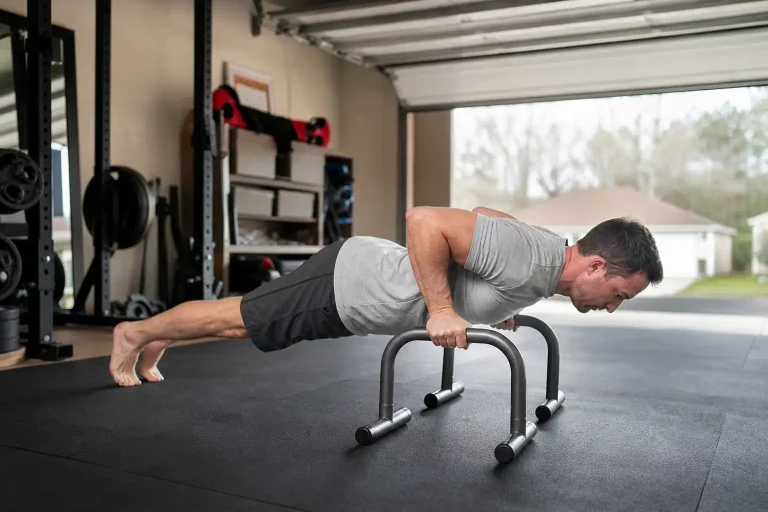
Best Push-Up Bars (2026): 5 Pairs Ranked
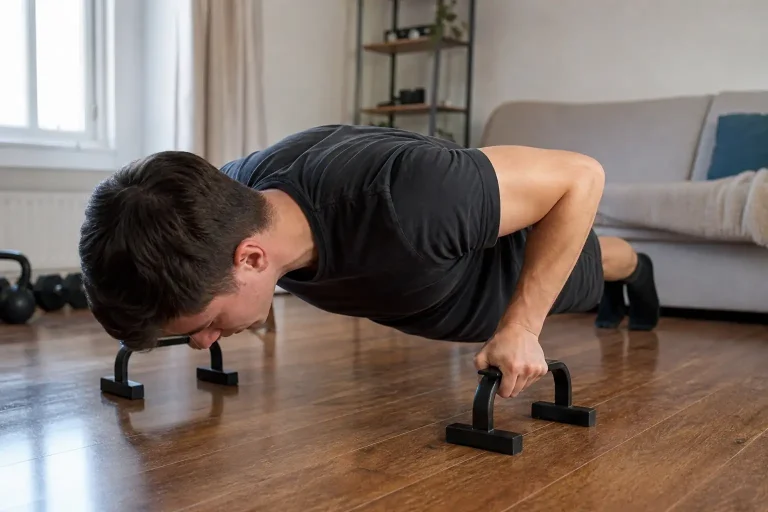
Best Push-Up Handles (2026): 5 Pairs Ranked
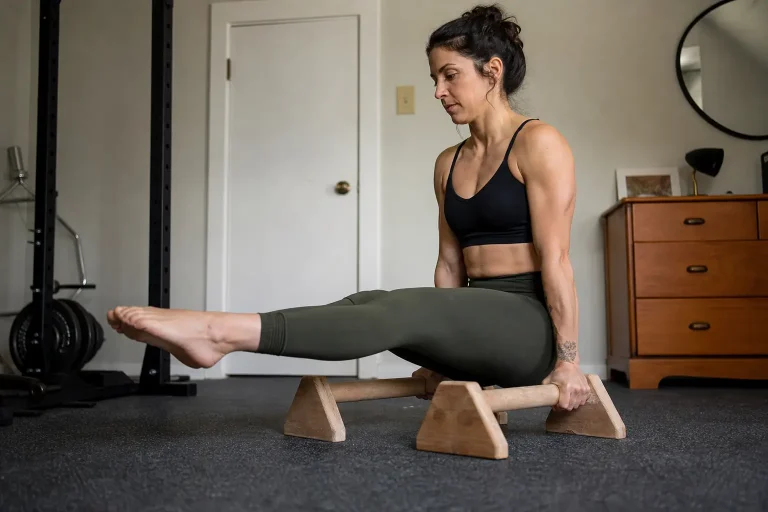
Best Wooden Parallettes (2026): 5 Pairs Ranked
Push-Up Bars Benefits (2026): What They Train and Who They Suit
Push-Up Bars Size Guide (2026): Which Height to Choose
Push-Up Bars Comparison Tool (2026): Compare Push-Up Bars
This article contains affiliate links. If you click through and make a purchase, we may earn a small commission at no extra cost to you. As an Amazon Associate, we earn from qualifying purchases. We do not show prices because they change constantly: product details and availability can change at any time, so please check the current price and details directly on Amazon. Learn more. Amazon and the Amazon logo are trademarks of Amazon.com, Inc. or its affiliates.
