

Short answer
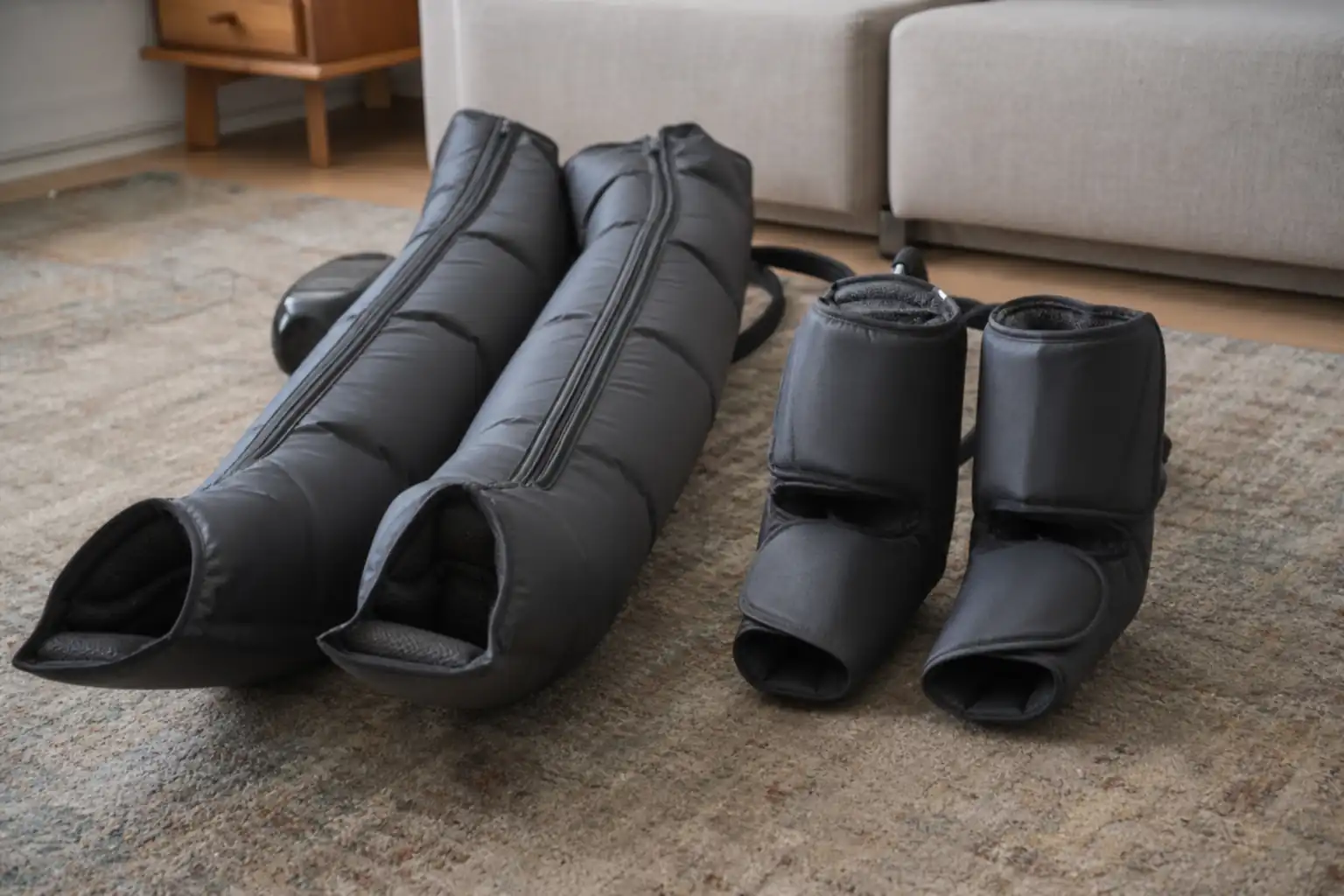
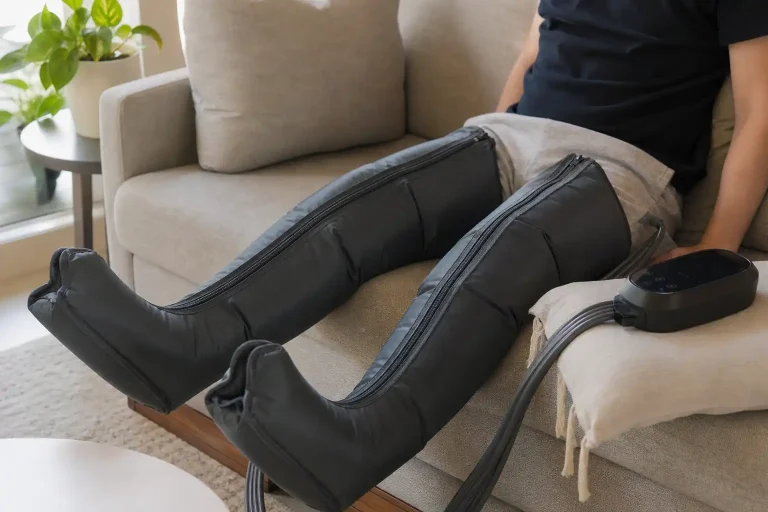
Full leg vs calf compression boots: Full-leg boots cover the foot, calf and thigh with more air chambers and zones; calf and foot wraps cover the lower leg and are smaller to store. Choose by the area you want covered and the room you have.
Key takeaways
- Full-leg boots cover the foot, calf and thigh; calf and foot wraps stop below the knee.
- Full-leg sets list more chambers and zones and cost more.
- Read the maker instructions before the first use.
See the ranking of full-leg sets in best compression boots for athletes and every type in best compression boots.
Full leg vs calf compression boots: Full-Leg vs Calf Compression Boots at a Glance
The two types differ in coverage and size, not in how a session works: air chambers inflate and release in a set order.
| Full-leg boots | Calf and foot wraps | |
|---|---|---|
| Coverage | Foot, calf and thigh | Foot and calf |
| Air chambers | Typically 4 to 10 | Typically 3 to 5 |
| Zones | Some sets let you set zones separately | A simpler set of modes |
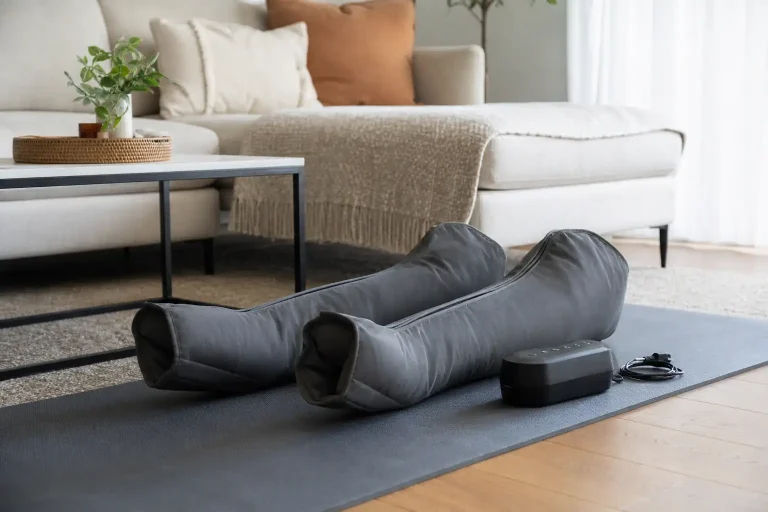
| Storage | Two sleeves, a pump and a controller; a bag on some sets | Smaller sleeves that tuck into a drawer |
| Sizing | Inseam, thigh and calf ranges | Calf range |
| Power | Cordless or corded | Cordless or corded |
| Cost | Higher | Lower |
Check Amazon for current pricing and availability.
When Full-Leg Boots Are the Better Choice
Choose full-leg boots if you want the thigh covered as well as the calf and foot, or if you want zone control. See our full-leg ranking for the five we rank first.
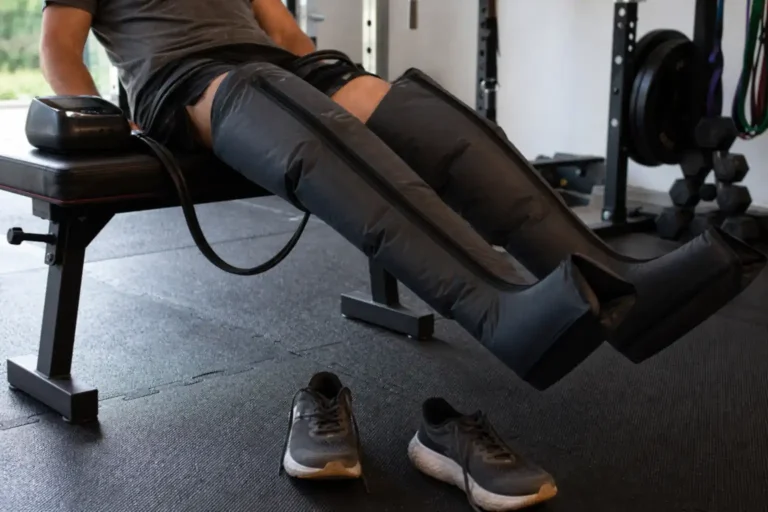
- More coverage: the sleeve runs from the foot to the thigh.
- More controls: some sets add zone control, pressure levels and a memory function.
- Size range: check the inseam, thigh and calf ranges in the maker chart.
When Calf and Foot Wraps Are the Better Choice
Choose a calf and foot set if you want a compact, simpler unit that is easy to put away and costs less. It is a smaller commitment if you are trying compression boots for the first time.
- Small spaces: the wraps are shorter and easier to store.
- A first set: fewer controls to learn.
- Lower price: less material, a smaller pump.
Power and Storage
Either type can be cordless or corded. A cordless set runs on a battery for the hours the maker states; see best wireless compression boots. A corded set needs an outlet near the seat. Measure with our size guide before you order, and read how to use compression boots for the setup steps.
Full-leg boots

fed fitness Red Light Compression Boots
FitScore 55.6/100
A cordless full-leg set with 5 overlapping air chambers, up to 170 mmHg, three heat levels, red light, vibration and a 290-minute battery. Ranked #1 in our best compression boots guide, FitScore 55.6 for that intent.
Check Price on AmazonFull-leg boots

Musugy 5-Chamber Compression Boots
FitScore 52.1/100
A corded full-leg set with 5 air chambers, 9 pressure levels up to 120 mmHg and a built-in pressure sensor. Ranked #3 in our best compression boots guide, FitScore 52.1 for that intent.
Check Price on AmazonChecklist: Full-Leg or Calf Boots?
6 checks
Tap a number to check off that step.
- 01
Decide whether you want the thigh covered.
- 02
Measure the leg with the maker chart.
- 03
Decide between cordless and corded.
- 04
Think about where you will store the set.
- 05
Check the warranty and the return terms.
- 06
Read the maker instructions and safety list before the first use.
Common Mistakes to Avoid
Mistake 1Buying full-leg boots without checking the thigh size range.
Mistake 2Expecting a calf set to cover the thigh.
Mistake 3Choosing a corded set with no outlet near the seat.
Mistake 4Choosing from the product title instead of the specs you need.
Mistake 5Skipping the maker safety list.
The Bottom Line
- 21 full-leg boots and 7 calf and foot wraps are in our pool of 28 compression boots.
- Full-leg boots in our pool list 4 to 10 air chambers; calf and foot wraps list 3 to 4.
- Both types are sized by the maker chart, and both need the maker instructions read before the first use.
- The FTC explains how to read a product warranty, and the federal warranty law sets what a written warranty must say.
Our Top Picks
 Full-leg bootsfed fitness Red Light Compression BootsFitScore55.6/100Check on Amazon
- Full-leg bootsMusugy 5-Chamber Compression BootsFitScore52.1/100Check on Amazon
Frequently Asked Questions
Neither is better for every buyer: full-leg boots cover more of the leg, calf and foot wraps are more compact and cost less.
No. Calf and foot wraps cover the lower leg; full-leg boots add the thigh.
In our pool, full-leg boots list 4 to 10 chambers and calf and foot wraps list 3 to 4.
Yes. Both types come in cordless and corded versions; a cordless set runs on a battery for the hours the maker states.
Not necessarily: read the maker safety instructions, and if you have a medical condition ask your clinician before you use them.
This article contains affiliate links. If you click through and make a purchase, we may earn a small commission at no extra cost to you. As an Amazon Associate, we earn from qualifying purchases. We do not show prices because they change constantly: product details and availability can change at any time, so please check the current price and details directly on Amazon. Learn more. Amazon and the Amazon logo are trademarks of Amazon.com, Inc. or its affiliates.
