
Short answer
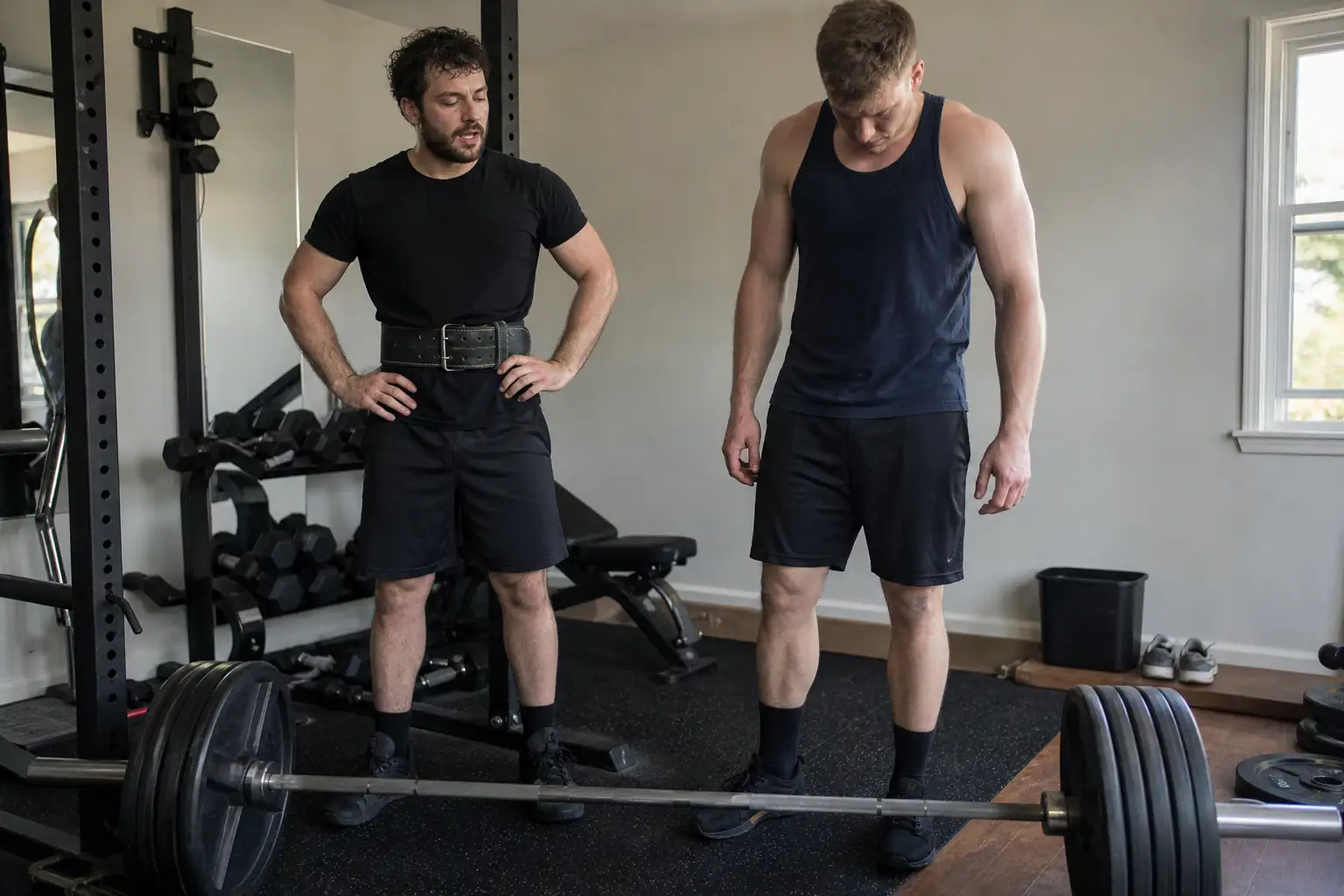
Do You Need a Weightlifting Belt: You do not need a weightlifting belt for light or moderate lifting. A belt helps when you squat or deadlift close to your maximum, where it gives your abs something to brace against.
Key takeaways
- A belt helps on near-maximal squats and deadlifts.
- You can train well without one on light and moderate work.
- Learn to brace first, then add a belt.
To pick one, see our best weightlifting belt guide.
Do You Need a Weightlifting Belt: When a Weightlifting Belt Helps
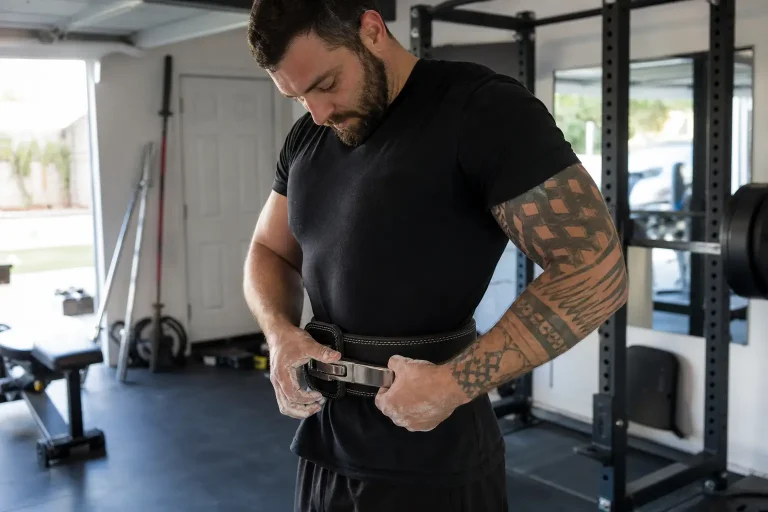
A belt gives your abs a wall to push against, so the pressure inside your torso rises and your trunk feels firmer under a heavy bar.
- Near-maximal squats: the lift where a belt shows the clearest difference.
- Heavy deadlifts: a belt pairs well with a strong brace off the floor.
- Heavy overhead presses: a firm trunk keeps the lower back from arching.
- Competition: lifters in federations train with the belt they will use on the platform.
When You Can Skip the Belt
Most of a normal week of training does not call for a belt.
- Warm-ups and light sets: train your own brace.
- Machines and isolation work: the trunk is not the limit.
- Learning the lifts: practise bracing with no belt first, then add one for heavy sets.
- Cardio and conditioning: a belt gets in the way of breathing.
Pro tip: Ask a clinician before you use a belt if you have high blood pressure, a hernia or are pregnant.
Belt or No Belt by Lift
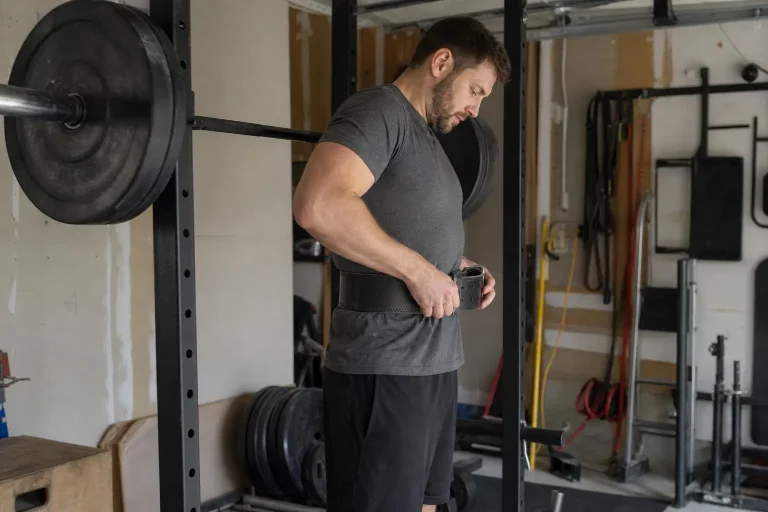
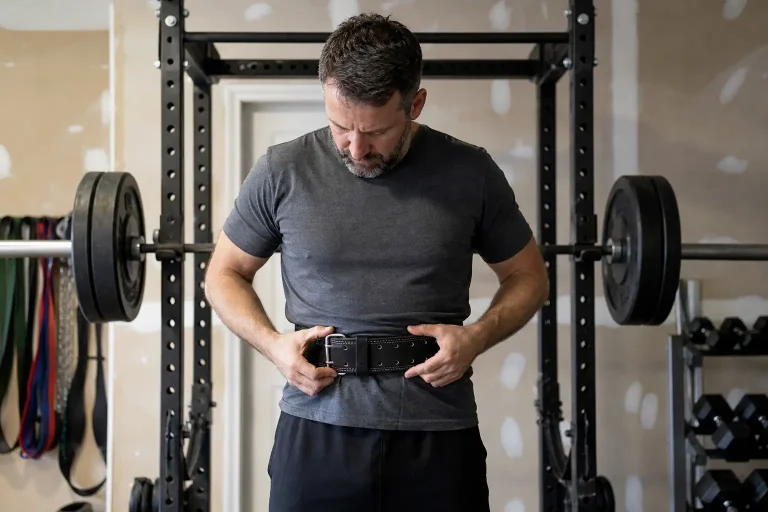
To set the belt up, see how to wear a weightlifting belt.
| Lift | Belt? | Why |
|---|---|---|
| Back squat, near max | Yes | The trunk is under the most load |
| Deadlift, near max | Yes | A firm trunk off the floor |
| Overhead press, heavy | Optional | Helps if the back arches |
| Bench press | No | The back is supported by the bench |
| Lunges and accessories | No | Lighter loads |
| Warm-up sets | No | Build your own brace |
Check Amazon for current pricing and availability.
Weightlifting Belts to Look At First
If you decide a belt is for you, these three suit different lifters.
A stiff approved belt

RDX IPF Powerlifting Belt 10mm and 13mm
FitScore 63.8/100
Cowhide at 10 mm or 13 mm with approvals for federation meets. Ranked #1 in our best weightlifting belt guide, FitScore 63.8 for that intent.
Check Price on AmazonA lever that closes fast

IBRO 10mm Powerlifting Lever Belt
FitScore 64.5/100
A leather lever belt with five sizes and a one-year warranty. Ranked #1 in our best lever weightlifting belt guide, FitScore 64.5 for that intent.
Check Price on AmazonA belt that lasts

Iron Bull Strength 7mm Tapered Leather Belt
FitScore 62.9/100
A 7 mm tapered leather belt with a lifetime warranty. Ranked #1 in our best leather weightlifting belt guide, FitScore 62.9 for that intent.
Check Price on AmazonChecklist Before You Buy a Belt
6 checks
Tap a number to check off that step.
- 01
Check that you lift close to your maximum on squats or deadlifts.
- 02
Practise a belly brace without a belt first.
- 03
Measure your waist at the navel.
- 04
Choose a lever or a prong closure.
- 05
Pick 10 mm for heavy lifting or 7 mm for comfort.
- 06
Plan to use it for heavy sets only.
Common Mistakes to Avoid
Mistake 1Wearing a belt for every set.
Mistake 2Using the belt instead of learning to brace.
Mistake 3Buying a belt by pant size.
Mistake 4Choosing a 13 mm belt for a short torso.
Mistake 5Wearing a belt for cardio.
The Bottom Line
- a 2026 study of a weightlifting belt and squat performance found that wearing a belt increased squat performance but not objectively measured postural stability.
- a study of weightlifting belts and wrist straps on deadlift kinematics studied belts and wrist straps in recreational lifters.
- A belt works with your bracing: you breathe into your belly and push against it.
- CDC lists muscle-strengthening activity on at least 2 days a week for adults; you can meet it without a belt.
Our Top Picks
 A stiff approved beltRDX IPF Powerlifting Belt 10mm and 13mmFitScore63.8/100Check on Amazon
- A lever that closes fastIBRO 10mm Powerlifting Lever BeltFitScore64.5/100Check on Amazon
- A belt that lastsIron Bull Strength 7mm Tapered Leather BeltFitScore62.9/100Check on Amazon
Frequently Asked Questions
Not for light or moderate lifting. A belt helps on near-maximal squats and deadlifts.
In a 2026 study, wearing a belt increased squat performance.
A belt works with your bracing, so train without it on lighter sets and keep your own brace strong.
Once you lift heavy enough that your trunk is the limit; learn to brace without a belt first.
See our best weightlifting belt guide for five ranked picks.
This article contains affiliate links. If you click through and make a purchase, we may earn a small commission at no extra cost to you. As an Amazon Associate, we earn from qualifying purchases. We do not show prices because they change constantly: product details and availability can change at any time, so please check the current price and details directly on Amazon. Learn more. Amazon and the Amazon logo are trademarks of Amazon.com, Inc. or its affiliates.
