

Short answer
Balance Board Benefits: A balance board gives you an unstable surface to practice balance on, makes squats, planks and push-ups ask more of the muscles that steady you, and, in low-tilt versions, keeps you moving at a standing desk. It is a training aid, not a treatment.
Key takeaways
- A balance board is balance practice you can do at home.
- It adds a challenge to core and strength moves.
- Low-tilt boards keep you moving at a desk.
See the rankings: best balance board and best balance trainer.
Balance Board Benefits at a Glance
The CDC guidance for older adults lists activities that improve balance, such as standing on one foot, as part of weekly activity for older adults. The National Institute on Aging describes balance as one of four types of exercise, with endurance, strength and flexibility.
| Board | Main use | Who it suits |
|---|---|---|
| Rocker board | Balance in one plane, desk movement | Beginners, desk workers |
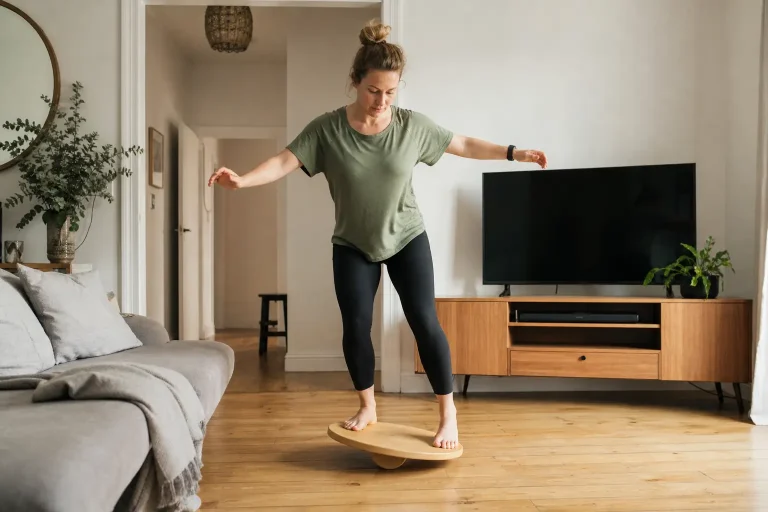
| Wobble board | Balance in every direction | Home workouts |
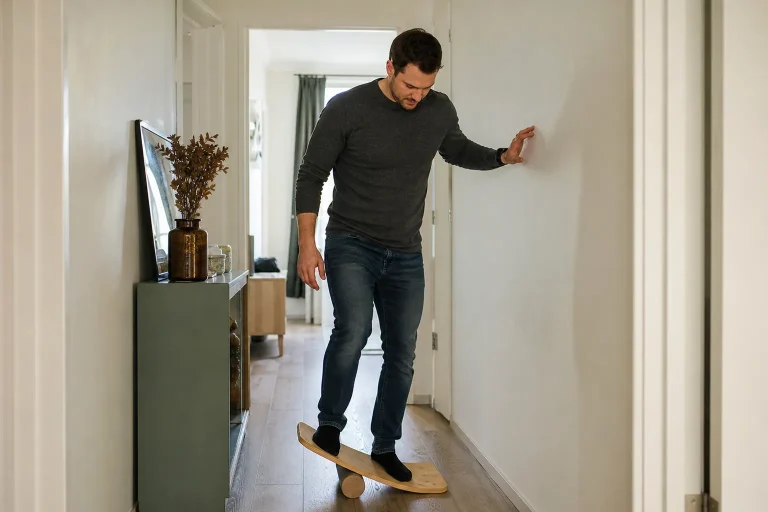
| Roller board | Dynamic balance | Experienced users |
| Half-dome trainer | Squats, lunges, planks on a soft surface | Home workouts |
| Desk board | Gentle motion while working | Standing desk users |
Check Amazon for current pricing and availability.
Balance Practice on an Unstable Surface
A board moves under you, so every second on it is balance practice. Start on two feet, then shift your weight, then try short single-leg holds next to a wall. See how to use a balance board.
- Rocker: one direction at a time.
- Wobble: every direction.
- Progress: longer holds, then fewer hand touches.
Core and Strength Moves on a Board
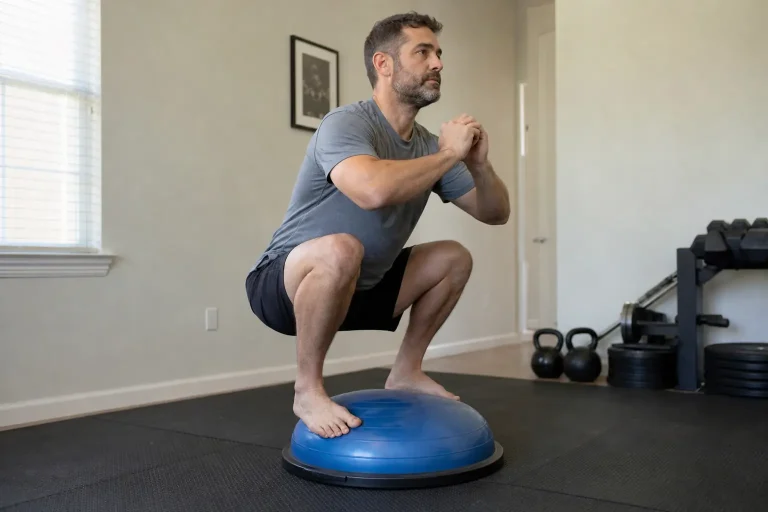
Squats, planks and push-ups on a board or dome add a balance challenge to familiar moves. Keep the load light at first and the range you can control.
- Planks: hands on a wobble board.
- Squats: on a dome or rocker.
- Push-ups: on a dome turned base-up.
Movement at a Standing Desk
A low-tilt board turns plain standing into gentle, steady motion while you type. Alternate board time with standing and sitting. See best standing desk balance board.
What a Balance Board Cannot Do
A board does not replace aerobic exercise or strength training, and it is not a treatment for an injury or a balance condition: follow your clinician for rehab.
Two Picks Worth a Look
The #1 balance board and the #1 half-dome trainer of our rankings. Compare more with our balance board comparison tool.
Balance board
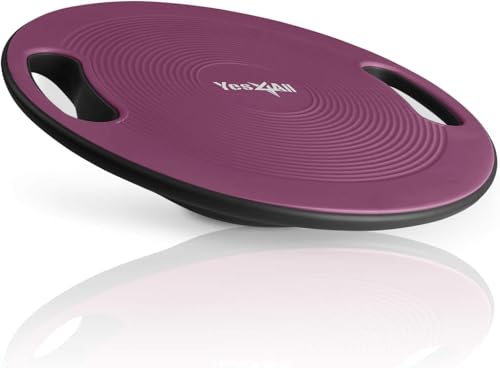
Yes4All Plastic Wobble Board with Handles
FitScore 61.6/100
300 lb rating, 15 degree tilt, carry handles. Ranked #1 in our best balance board guide, FitScore 61.6 for that intent.
Check Price on AmazonHalf-dome trainer

VEVOR Half Exercise Ball Trainer 23 in
FitScore 52.1/100
23 in dome, 660 lb rating, bands, pump and bag. Ranked #1 in our best balance trainer guide, FitScore 52.1 for that intent.
Check Price on AmazonChecklist: Getting the Most From a Balance Board
6 checks
Tap a number to check off that step.
- 01
Pick the board type for your goal.
- 02
Use a mat on smooth floors.
- 03
Keep a wall or desk within reach.
- 04
Start with short sessions.
- 05
Add moves gradually.
- 06
Check the weight rating.
Common Mistakes to Avoid
Mistake 1Expecting a board to replace other exercise.
Mistake 2Starting on a roller board.
Mistake 3Training on a wet or smooth floor.
Mistake 4Holding your breath.
Mistake 5Going too long on day one.
The Bottom Line
- Balance training is part of public activity guidance for older adults.
- Wobble and rocker boards train balance in different planes.
- Low-tilt boards keep you moving at a standing desk.
- The Physical Activity Guidelines for Americans also call for aerobic and muscle-strengthening activity.
Our Top Picks
 Balance boardYes4All Plastic Wobble Board with HandlesFitScore61.6/100Check on Amazon
- Half-dome trainerVEVOR Half Exercise Ball Trainer 23 inFitScore52.1/100Check on Amazon
Frequently Asked Questions
Balance practice on an unstable surface, a harder version of core moves, and movement at a standing desk.
Planks, squats and push-ups on a board ask more of the muscles that steady you.
Start with a few minutes and build up as your control improves.
Many use one next to a wall or rail; ask a clinician first if you have a balance condition.
This article contains affiliate links. If you click through and make a purchase, we may earn a small commission at no extra cost to you. As an Amazon Associate, we earn from qualifying purchases. We do not show prices because they change constantly: product details and availability can change at any time, so please check the current price and details directly on Amazon. Learn more. Amazon and the Amazon logo are trademarks of Amazon.com, Inc. or its affiliates.
