

Short answer
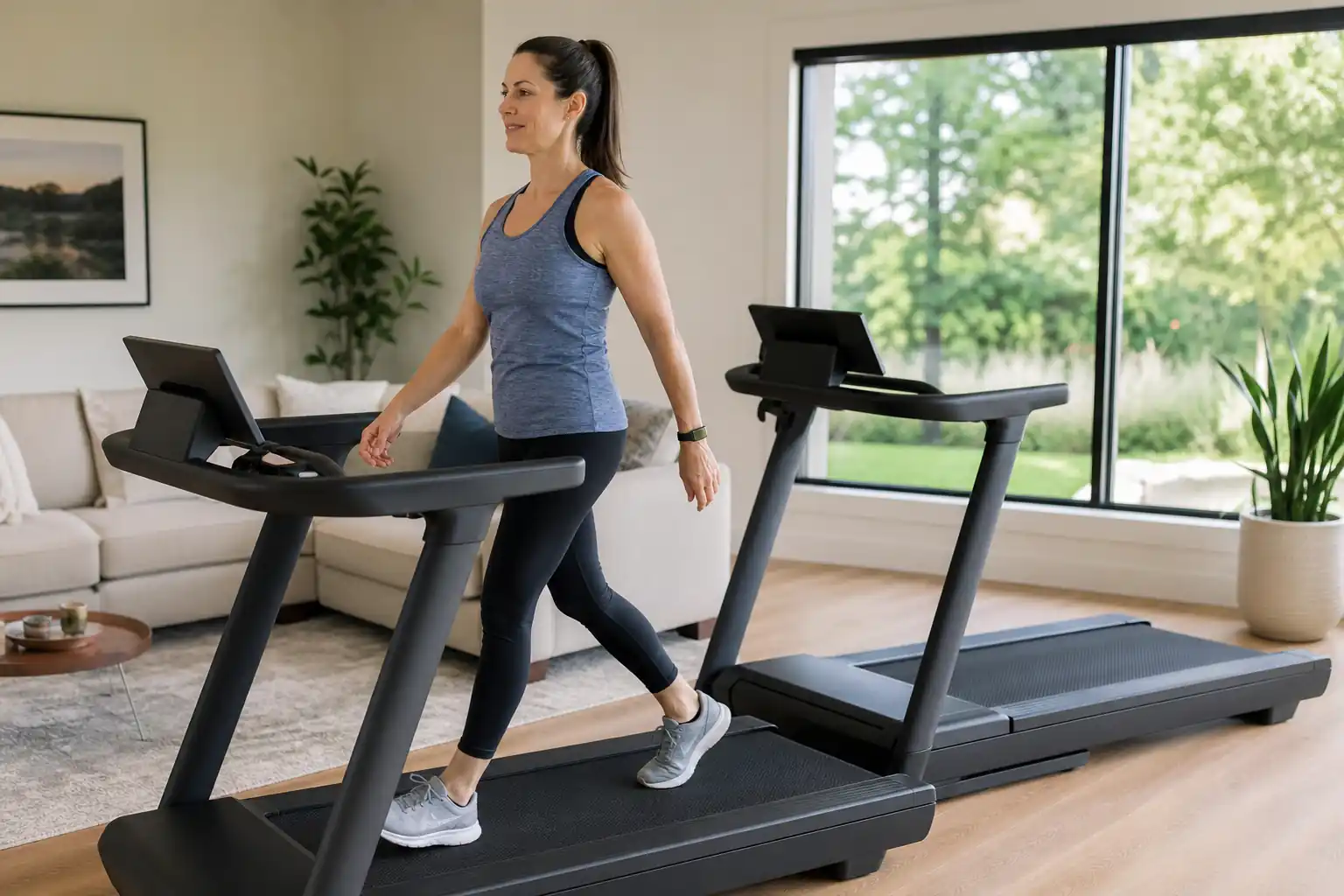
A good treadmill speed is one that matches your goal and effort. Brisk walking usually falls between 3.0 and 4.0 mph; the CDC counts 2.5 mph or faster as moderate activity. Jogging typically runs about 4.5 to 6.0 mph, and running starts around 6.0 mph. Beginners should pick a pace where they can talk but not sing.
Key takeaways
- Brisk walking is usually 3.0 to 4.0 mph; the CDC counts 2.5 mph and up as moderate.
- Jogging is roughly 4.5 to 6.0 mph; running is generally faster than 6.0 mph.
- Most people switch from walking to running around 4.7 mph.
- Set speed by the talk test and good posture, not by a target number.
- Progress time first, then speed, one change at a time.
- Incline is a second dial that raises effort without raising speed.
There is no single good treadmill speed. A pace that is a hard workout for one person is a warm-up for another, and the right number depends on whether you want to walk, jog or run, your fitness, your height and the incline you use. What you can know is the typical range for each activity and how to find the speed that fits you.
This guide gives typical treadmill speeds for walking, jogging and running with pace tables, explains how to set your own speed by effort, and lays out beginner progressions you can follow. For a full conversion table from every speed to pace, see our treadmill pace chart.
Good Treadmill Speeds at a Glance
The table shows typical speed ranges for each type of treadmill workout and how each should feel. The effort column uses the CDC talk test, which describes moderate activity as being able to talk, but not sing, and vigorous activity as not being able to say more than a few words without pausing for breath.
The ranges overlap on purpose. A tall, fit walker may walk comfortably at 4.0 mph, while a shorter or newer exerciser may find 3.0 mph brisk. Use the ranges to choose a starting point, then adjust by feel.
| Activity | Typical speed | Pace per mile | How it should feel |
|---|---|---|---|
| Easy walk or warm-up | 2.0–2.9 mph | 30:00–20:41 | Easy breathing, full conversation |
| Brisk walk | 3.0–4.0 mph | 20:00–15:00 | Can talk, cannot sing |
| Power walk | 4.0–4.5 mph | 15:00–13:20 | Short sentences; near the walk-to-run switch |
| Easy jog | 4.5–6.0 mph | 13:20–10:00 | Breathing harder, can still talk in phrases |
| Steady run | 6.0–8.0 mph | 10:00–7:30 | A few words at a time |
| Fast running and intervals | 8.0 mph and up | 7:30 and faster | Hard to speak; short efforts |
Check Amazon for current pricing and availability.
Good Walking Speeds on a Treadmill
For walking, 3.0 to 4.0 mph is the range most adults call brisk. The CDC uses 2.5 mph or faster as its example of brisk, moderate-intensity walking, so anything at or above that counts toward the 150 minutes of moderate activity a week in its adult guidelines.
Walking gets awkward near the top of the range. Research on gait shows that people tend to switch from walking to running at about 7.6 km/h, roughly 4.7 mph. If 4.5 mph feels like you are about to break into a jog, that is normal; add incline to raise the effort instead of speed. Our best treadmill for walking guide favors smooth motors at walking speeds.
| Speed (mph) | Speed (km/h) | Pace per mile | Miles in 30 min | Typical effort |
|---|---|---|---|---|
| 2.0 | 3.2 | 30:00 | 1.00 | Easy, warm-up |
| 2.5 | 4.0 | 24:00 | 1.25 | Moderate for many (CDC brisk threshold) |
| 3.0 | 4.8 | 20:00 | 1.50 | Brisk |
| 3.5 | 5.6 | 17:09 | 1.75 | Brisk to fast |
| 4.0 | 6.4 | 15:00 | 2.00 | Fast walk |
| 4.5 | 7.2 | 13:20 | 2.25 | Power walk or very slow jog |
Best for Walking
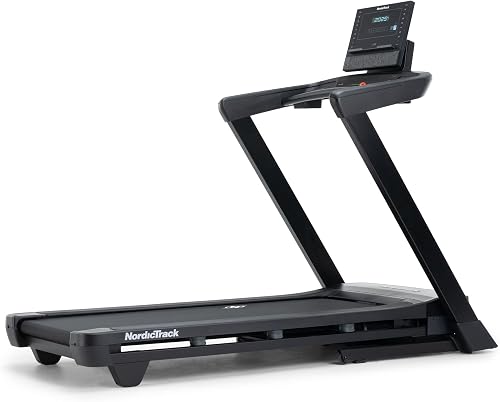
NordicTrack T Series 7
FitScore 78.9/100
A 20 × 55-inch belt, 0–10 mph and 0–10% incline with a 300-lb capacity; iFIT classes need a paid membership. Read our review.
Ranked in our Best Treadmill for Walking guide
Check Price on AmazonBest Incline Walking
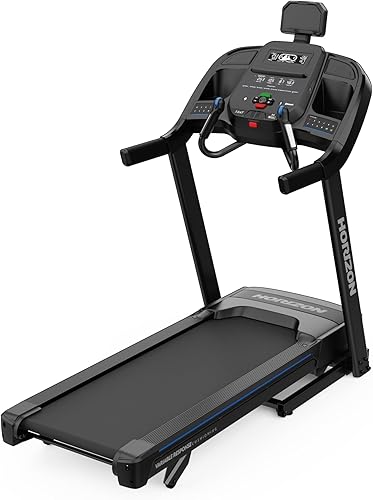
Horizon 7.0 AT
FitScore 77.2/100
A 3 HP motor, 20 × 60-inch deck, 0.5–12 mph and 15% incline, with QuickDial controls and no subscription required. Read our review.
Ranked in our Best Treadmill for Walking guide
Check Price on AmazonBest Value

XTERRA Sport Series – TR75
FitScore 75.6/100
A 3 HP motor, 20 × 60-inch belt, up to 12 mph and 12% incline, plus a 350-lb capacity for walkers who may jog later. Read our review.
Ranked in our Best Treadmill for Walking guide
Check Price on AmazonGood Jogging and Running Speeds
Jogging usually starts around 4.5 to 5.0 mph and runs to about 6.0 mph, a 10:00 mile. Running is generally anything faster. One runner’s easy pace may be 5.5 mph and another’s 7.5 mph; there is no fixed line between jogging and running; the difference is effort and stride.
Your easy pace should feel conversational, even if that is slower than you expect. Save faster speeds for short intervals and tempo runs. When you want treadmill effort to match flat outdoor running, a classic study found that a 1% incline best matched the energy cost of outdoor running at speeds of about 6.5 to 11.2 mph. Our treadmill vs running outside guide explains why.
The table converts common running speeds to pace and shows your 5K finish time if you held that speed throughout.
| Speed (mph) | Speed (km/h) | Pace per mile | Pace per km | 5K time |
|---|---|---|---|---|
| 5.0 | 8.0 | 12:00 | 7:27 | 37:17 |
| 5.5 | 8.9 | 10:55 | 6:47 | 33:54 |
| 6.0 | 9.7 | 10:00 | 6:13 | 31:04 |
| 6.5 | 10.5 | 9:14 | 5:44 | 28:41 |
| 7.0 | 11.3 | 8:34 | 5:20 | 26:38 |
| 7.5 | 12.1 | 8:00 | 4:58 | 24:51 |
| 8.0 | 12.9 | 7:30 | 4:40 | 23:18 |
| 9.0 | 14.5 | 6:40 | 4:09 | 20:43 |
| 10.0 | 16.1 | 6:00 | 3:44 | 18:38 |
How to Find Your Own Good Speed
Start slow and let your body set the number. The Arthritis Foundation suggests starting on a slow setting for three to five minutes and building gradually to a moderate pace, then slowing down before you stop. That works for everyone: warm up at an easy walk, raise the speed by 0.2 to 0.3 mph at a time and stop when you reach the effort you want.
For walking workouts, your good speed is the fastest pace you can hold with a natural stride, upright posture and hands off the rails. For runs, it is the pace where you can still talk in short phrases. If you have to hold the handrails to keep up, the belt is too fast.
- Warm up: 3 to 5 minutes at an easy walk, about 2.0 to 3.0 mph.
- Find your brisk walk: raise speed until you can talk but not sing.
- Find your easy jog: start just above your fastest comfortable walk and adjust by breathing.
- Check posture: if you lean forward, grip the rails or shorten your stride, slow down.
- Cool down: 3 to 5 minutes at an easy walk before stopping the belt.
Watch out: Clip the safety key to your clothing, straddle the belt when you start it and step on at a slow speed. Stop and seek help immediately if you feel chest discomfort, unusual shortness of breath or lightheadedness, which the American Heart Association lists among the warning signs of a heart attack.
Beginner Speed Progressions
Progress one variable at a time: first time, then speed. The walking plan below builds to 30 minutes of brisk walking, and the run-walk plan builds from short jogs to 20 minutes of continuous easy running. Both are examples, not prescriptions. Repeat a week if it felt hard, and talk with your doctor first if you have a heart condition, joint problems or have been inactive for a long time.
- Do three sessions a week with a rest or easy day between them.
- Warm up and cool down for 3 to 5 minutes at an easy walk every session.
- Raise speed only when the current week feels controlled.
| Week | Walking plan | Run-walk plan |
|---|---|---|
| 1 | 20 min at 2.5–3.0 mph | 6 × (1 min jog at 4.5–5.0 mph + 2 min walk at 3.0–3.5 mph) |
| 2 | 25 min at 3.0 mph | 6 × (2 min jog + 2 min walk) |
| 3 | 30 min at 3.0–3.3 mph | 5 × (3 min jog + 1.5 min walk) |
| 4 | 30 min at 3.3–3.5 mph | 4 × (5 min jog + 1 min walk) |
| 5 | 30 min at 3.5 mph with 2–3% incline | 3 × (8 min jog + 1 min walk) |
| 6 | 30–40 min at 3.5–4.0 mph | 20 min continuous easy jog |
Speed, Incline and Your Goals
For general health, the CDC recommends 150 minutes of moderate activity or 75 minutes of vigorous activity a week. Brisk treadmill walking counts toward the first target and running toward the second, so pick the speed you can sustain week after week. For weight loss, consistency and total time matter more than any single fast session; our treadmill weight-loss guide and treadmill calories burned guide show how speed and incline change energy use.
Speed is only one dial. Raising the incline at a walking pace can make a workout as hard as jogging without the impact; the 12-3-30 treadmill workout is one popular example. For fitness gains, short faster intervals work well once you have a base; see our treadmill HIIT workouts.
| Goal | Speed approach | Add incline? |
|---|---|---|
| General health | Brisk walk, 3.0–4.0 mph, most days | Optional, 1–3% |
| Weight loss | Brisk walk or easy jog you can sustain for 30–60 min | Yes, to raise effort without speed |
| Low impact | Moderate walk, 2.5–3.5 mph | Moderate incline instead of faster speed |
| 5K or 10K training | Easy runs plus short faster intervals | 1% for outdoor-like effort |
| Endurance | Long runs at conversational pace | 1%, with occasional hills |
What Speed Range Does Your Treadmill Need?
Match the treadmill to the fastest speed you plan to use, with some headroom. In our spec data, walking pads often top out at 4 to 6 mph, compact treadmills at about 8.5 to 10 mph, and full-size home treadmills at 10 to 12 mph, with a few going to 14 mph. If you only walk, 10 mph is plenty; if you run intervals, look for 12 mph.
Fast running also needs a longer deck and a stronger motor. Runners should look for a 20 × 60-inch or 22 × 60-inch belt and a motor rated for continuous use; our best treadmill for running and tall runners guides rank those models. Speed changes matter too: handlebar dials or one-touch buttons make interval work easier than tapping up 0.1 mph at a time.
Best for Running

Horizon 7.4 AT
FitScore 89.9/100
A 3.5 CHP motor, 0.5–12 mph, a 22 × 60-inch deck and QuickDial controls for fast, precise speed changes. Read our review.
Ranked in our Best Treadmill for Running guide
Check Price on AmazonBest Premium

Sole F89
FitScore 89.6/100
A 4 HP motor, 0.5–12 mph, 15% incline and 6% decline on a 22 × 60-inch deck with a 375-lb capacity. Read our review.
Ranked in our Best Treadmill for Running guide
Check Price on AmazonBest Heavy-Duty

Sole TT8
FitScore 89.2/100
A non-folding 4 HP deck with 0.5–12 mph, 15% incline, 6% decline and a 400-lb capacity for frequent runners. Read our review.
Ranked in our Best Treadmill for Running guide
Check Price on AmazonSpeed Checklist
- Warm up for 3 to 5 minutes at an easy walk.
- Use the talk test to set effort, not someone else’s number.
- Brisk walking: start around 3.0 mph and adjust.
- Easy jogging: start around 4.5 to 5.0 mph and adjust.
- Raise speed in small steps of 0.2 to 0.3 mph.
- Add incline instead of speed when walking feels too easy.
- Use 1% incline for outdoor-like running effort.
- Choose a treadmill whose top speed exceeds your fastest workout.
Common Mistakes to Avoid
- Starting too fast and holding the handrails to keep up.
- Forcing a power walk past the point where jogging would feel natural.
- Running every session at the same hard pace.
- Raising speed and time in the same week.
- Skipping the warm-up and cool-down.
- Buying a walking pad and expecting to run on it.
The Bottom Line
- The CDC lists walking at 2.5 mph or faster as moderate-intensity activity and jogging or running as vigorous.
- Most people switch from walking to running at about 7.6 km/h, roughly 4.7 mph, according to research on the walk-to-run transition.
- The talk test is the simplest guide: at moderate effort you can talk but not sing; at vigorous effort you can say only a few words without pausing.
- Pace in minutes per mile equals 60 divided by your speed in mph, so 6.0 mph is a 10:00 mile.
- Full-size home treadmills in our guides top out at 10 to 14 mph; walking pads often stop at 4 to 6 mph.
Our Top Picks
 Best for WalkingNordicTrack T Series 7FitScore78.9/100Check on Amazon
- Best Incline WalkingHorizon 7.0 ATFitScore77.2/100Check on Amazon
- Best ValueXTERRA Sport Series – TR75FitScore75.6/100Check on Amazon
- Best for RunningHorizon 7.4 ATFitScore89.9/100Check on Amazon
- Best PremiumSole F89FitScore89.6/100Check on Amazon
- Best Heavy-DutySole TT8FitScore89.2/100Check on Amazon
Frequently Asked Questions
For most adults, 3.0 to 4.0 mph is a brisk walking speed. The CDC counts walking at 2.5 mph or faster as moderate-intensity activity.
Start with an easy walk around 2.0 to 3.0 mph and build toward a brisk walk where you can talk but not sing. For run-walk sessions, jog at 4.5 to 5.0 mph for short intervals.
Yes. 3 mph is a 20-minute mile and a brisk walk for many people. Add incline if you want more effort without walking faster.
Jogging is usually about 4.5 to 6.0 mph, or a 13:20 to 10:00 mile, depending on your fitness and stride.
Running generally starts around 6.0 mph, a 10:00 mile, though the line between jogging and running is about effort more than a fixed number.
For most adults, 4 mph is a fast walk. Many people start to feel the urge to jog around 4.5 to 4.7 mph.
The best speed is one you can sustain for 30 to 60 minutes most days, such as a brisk walk or easy jog. Adding incline raises effort without speed.
Explore More Treadmill Guides
Treadmill Pace Chart (2026): MPH to Min/Mile and Min/Km
Best Treadmill for Walking: 5 Standout Home Picks for 2026
Best Treadmill for Running (2026): Top 5 Picks
Best Treadmill for Jogging: 5 Home Models Worth Buying in 2026
Best Treadmill for Beginners: 5 Reliable Home Models for 2026
How to Lose Weight on a Treadmill (2026): Weekly Plans for Walkers and Runners
This article contains affiliate links. If you click through and make a purchase, we may earn a small commission at no extra cost to you. As an Amazon Associate, we earn from qualifying purchases. We do not show prices because they change constantly: product details and availability can change at any time, so please check the current price and details directly on Amazon. Learn more. Amazon and the Amazon logo are trademarks of Amazon.com, Inc. or its affiliates.
