

Short answer
There is no standard lifespan figure: how long a treadmill lasts depends on how it is built, how hard it is used and how well it is maintained. A full-size treadmill used within its limits and maintained as the manual describes can last many years, mostly by replacing wear parts. Long motor and parts warranties are the best durability signal.
Key takeaways
- There is no standard lifespan rating; warranty terms are the best signal.
- Belts, decks, rollers, drive belts and boards wear first and can usually be replaced.
- Running, heavier users and many daily hours shorten life; margin extends it.
- Heat, dust and poor power shorten the life of motors and electronics.
- Regular lubrication, tension checks and motor-area cleaning add years.
- Repair when the frame is sound and parts are available; replace when they are not.
Ask how long a treadmill lasts and you will see confident numbers in years, but none come from a standardized test. Two identical machines can age very differently: one used for daily walking in a cool room and lubricated on schedule, the other used for hard running by two people in a dusty garage.
This guide explains what actually wears out, which factors shorten or extend a treadmill’s life, how to read warranty terms as a durability signal and when a repair is worth it. It draws on specs and warranty data from our reviews and on our treadmill maintenance guide. If you are shopping for a long-lasting machine now, go straight to our best durable treadmill guide.
Why There Is No Single Lifespan Number
A treadmill is not one part with one lifespan. It is a frame, a motor, a deck, a belt, two rollers, a drive belt, a control board, an incline motor and a console, and each wears at a different rate. Most treadmills reach the end of their useful life because a repair costs more than it seems worth or parts are no longer available, not because the frame breaks.
Use matters more than age. A walking pad used for slow desk walking and a running treadmill used for daily intervals face completely different loads. That is why the most useful questions are what kind of use the treadmill was built for, how much margin you leave below its limits and how the maker backs it. Our treadmill buying guide covers how to match motor, deck and capacity to your use.
Be cautious with lifespan claims in years that you see in ads or listings. Treat them as marketing unless they come with a warranty that says the same thing.
What Wears Out First on a Treadmill
Wear parts fail in a fairly predictable order. The walking belt and deck take friction on every step, so they are usually the first major parts to need attention. Roller bearings, the drive belt between motor and front roller and the control board come next. A well-built steel frame rarely limits lifespan on home machines.
Most of these parts can be replaced, which is why a well-supported treadmill can stay in service much longer than its first belt. Check parts availability before you buy, especially from brands that sell only online. In our research, THERUN sells only through Amazon with no direct support channel beyond its 1-year warranty, which can make out-of-warranty parts harder to find. Our treadmill lubrication guide explains how to protect the belt and deck.
| Part | Signs of wear | Usual fix |
|---|---|---|
| Walking belt | Frayed edges, slipping, thin or glazed surface, visible seam thump | Re-tension and lubricate; replace when worn |
| Deck board | Rough or dry feel, more noise, motor strain | Lubricate; flip or replace if worn |
| Rollers and bearings | Squeal, grinding, belt that will not track | Replace bearings or rollers |
| Drive belt | Slipping under load, black dust under the hood | Replace drive belt |
| Motor control board | Error codes, speed surges, unit will not start | Service diagnosis, board replacement |
| Drive motor | Burning smell, overheating, weak acceleration | Service; often covered by a long motor warranty |
| Incline motor | Stuck incline, grinding, wrong readings | Recalibrate; replace motor or sensor |
| Console and buttons | Dead keys, flickering display, app connection failures | Firmware update or console replacement |
Check Amazon for current pricing and availability.
Factors That Shorten or Extend Treadmill Life
Load is the biggest factor. Running loads the motor, deck and frame far more than walking, and a heavier user adds load on every step. Leave a margin between the heaviest user and the rated capacity, and pick a motor rated for continuous duty at your speed. Heavier users should start with our best treadmill for heavy people guide.
Total hours come next. One walker using the treadmill a few times a week puts far less wear on it than a household where two people run on it every day. Long sessions at steep incline also keep the motor working hard.
Environment and power matter more than most owners expect. Dust and pet hair are drawn into the motor area and trap heat around the electronics. Heat, humidity and direct sun age belts and boards faster. Voltage drops from extension cords or shared circuits can stress the motor controller. Our maintenance guide covers placement and power in detail, and the best treadmill for apartment guide helps if your space is tight.
- Shortens life: frequent running near top speed, heavy users near the capacity limit, several daily users.
- Shortens life: dusty garages, damp basements, direct sun, extension cords, skipped lubrication.
- Extends life: walking within capacity, a dense mat, a clean motor area and a dedicated grounded outlet.
- Extends life: correct belt tension and tracking, lubrication on schedule, prompt repair of small problems.
What Warranty Terms Tell You About Lifespan
A warranty is a maker putting money behind its own durability claims, so it is the closest thing to a lifespan rating you will find. Read all four lines: frame, motor, parts and labor. Lifetime frame coverage is common and not very telling, because frames rarely fail. Motor, parts and labor terms say much more.
Patterns in our reviews are clear. Established home brands such as Horizon, Sole and XTERRA pair lifetime frame and motor coverage with one to five years on parts on many full-size models. Some iFIT models list shorter terms, such as 2 years across frame, motor, parts and labor on the NordicTrack Commercial 1750. Many walking pads list 1 year. The FTC explains what full and limited warranties cover and why you should read the exclusions.
| Model | Type | Frame | Motor | Parts | Labor |
|---|---|---|---|---|---|
| XTERRA TR150 | Compact folding | Lifetime | 1 year | 90 days | 90 days |
| THERUN X1 | Walking pad | 1 year | 1 year | 1 year | 1 year |
| SereneLife SLFTRD26BT | Compact folding | 3 years | 3 years | 3 years | 3 years |
| NordicTrack Commercial 1750 | Full-size, iFIT | 2 years | 2 years | 2 years | 2 years |
| Horizon 7.0 AT | Full-size | Lifetime | Lifetime | 3 years | 1 year |
| Horizon 7.4 AT | Full-size | Lifetime | Lifetime | 5 years | 2 years |
| Sole TT8 | Full-size, non-folding | Lifetime | Lifetime | 5 years | 2 years |
| Bowflex T7 | Full-size | 15 years | 15 years | 5 years | 2 years |
Pro tip: Register the treadmill right after delivery and keep the receipt, serial number and a simple maintenance log together. Terms change, so check the current warranty on the product page before you buy.
How Lifespan Differs by Treadmill Type
Walking pads are built for slow speeds and light daily use. Their thin decks, short belts and compact motors leave little margin, and most list 1 year of coverage. They can serve well for desk walking but are not built for running. Our best walking pad guide focuses on models suited to daily walking.
Compact folding treadmills add a frame and handrails but often keep smaller motors and short parts coverage, as with the 90-day parts terms on compact XTERRA models. Full-size folding treadmills with 20 or 22-inch decks and 3.0 HP or more, such as the Horizon 7.0 AT and XTERRA TR75, are built for regular jogging and carry longer coverage.
Heavy non-folding and commercial-style treadmills such as the Sole TT8 have the most margin: 4.0 HP, a 400-lb capacity and long parts coverage. Manual treadmills have no drive motor (self-powered), which removes a major failure point, though the belt, slats and bearings still wear; see our best manual treadmill guide.
Best Durable Value

XTERRA TR75
FitScore 82/100
A 3.0 HP motor, 20 × 60-inch deck and 350-lb capacity with a lifetime frame and motor and 2 years on parts.
Ranked in our Best Durable Treadmill guide
Check Price on AmazonBest Mid-Range Pick
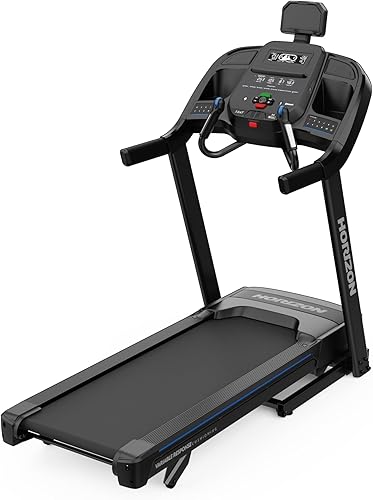
Horizon 7.0 AT
FitScore 80.8/100
A 3.0 HP motor and 20 × 60-inch deck for regular jogging, with a lifetime frame and motor and 3 years on parts.
Ranked in our Best Value Treadmill in 2026 guide
Check Price on AmazonMost Margin

Sole TT8
FitScore 85.6/100
A non-folding 4.0 HP treadmill with a 400-lb capacity, a 22 × 60-inch deck and 5 years on parts.
Ranked in our Best Commercial Treadmill guide
Check Price on AmazonMaintenance Habits That Add Years
Most premature failures trace back to friction, heat or a loose adjustment. Lubricate the deck on the schedule your manual gives, using the product it specifies. Keep the belt tensioned and centered, because a slipping belt wears the deck and drive belt and a tight one loads the bearings. Our maintenance guide has a full weekly-to-yearly schedule.
Every few months, unplug the treadmill, let it cool and vacuum dust from the motor area with a soft brush, as your manual describes. Tighten bolts, check the power cord and level the frame. Small noises are often early warnings; a squeak fixed today is cheaper than a roller replaced next year.
Check for recalls too. The CPSC keeps a searchable list of product recalls, and a recall repair should come before routine work.
- After each workout: wipe sweat from the console, rails and belt edges.
- Weekly: vacuum around and under the treadmill; check that the belt is centered.
- On the manual schedule: lubricate the deck and check belt tension.
- Every few months: clean the motor area, tighten bolts, inspect the cord.
Repair or Replace? How to Decide
Repair is usually the right call when the frame is solid, the problem is a known wear part such as a belt, drive belt or bearing, parts are available and the warranty still covers the motor or parts. Replace the treadmill when the frame is cracked or bent, when parts are discontinued, when several major parts fail at once or when the machine no longer fits how you train.
If you are replacing, use the failure as a lesson. A treadmill that wore out quickly under running was probably underbuilt for that use, so move up in motor, deck and capacity. Our best durable treadmill and best treadmill for running guides rank machines with the most margin.
Most Durable Overall

Horizon 7.4 AT
FitScore 89.7/100
A 3.5 CHP motor, 22 × 60-inch deck and 350-lb capacity, with a lifetime frame and motor, 5 years on parts and 2 years of labor.
Ranked in our Best Durable Treadmill guide
Check Price on AmazonBest Performance

Sole F89
FitScore 87.7/100
A 4.0 HP motor and 375-lb capacity with a lifetime frame and motor warranty and 3 years on parts.
Ranked in our Best Durable Treadmill guide
Check Price on AmazonBest Warranty-Focused Pick

Bowflex T7
FitScore 79.9/100
A 20 × 60-inch deck and 350-lb capacity, with 15 years on frame and motor, 5 years on parts and 2 years of labor.
Ranked in our Best Durable Treadmill guide
Check Price on AmazonTreadmill Longevity Checklist
- Choose a treadmill built for your fastest regular speed, not your average one.
- Leave a margin between the heaviest user and the weight capacity.
- Compare motor, parts and labor warranty terms, not only the frame.
- Confirm the brand has a support channel and sells replacement parts.
- Place the treadmill on a mat in a cool, dry, low-dust room.
- Plug it into a grounded wall outlet as the manual specifies.
- Lubricate and check belt tension on the schedule in the manual.
- Register the warranty and keep a maintenance log.
Common Mistakes to Avoid
- Running daily on a treadmill designed for walking.
- Trusting a lifespan claim in years that the warranty does not back up.
- Skipping lubrication until the deck squeaks or the motor strains.
- Using an extension cord or a shared, overloaded circuit.
- Ignoring small noises until a bearing or roller fails.
- Keeping the treadmill in a dusty garage without cleaning the motor area.
The Bottom Line
- No industry standard rates treadmill lifespan, so warranty terms are the most concrete signal of how long a maker expects a model to last.
- Belts, decks, rollers, drive belts and control boards wear out long before a well-built frame does.
- Running, heavier users, heat, dust and power problems shorten lifespan; walking within the rated capacity extends it.
- In our reviews, coverage ranges from 90 days on parts for some compact models to lifetime frame and motor with 5 years on parts on the Horizon 7.4 AT and Sole TT8.
Our Top Picks
 Best Durable ValueXTERRA TR75FitScore82/100Check on Amazon
- Best Mid-Range PickHorizon 7.0 ATFitScore80.8/100Check on Amazon
- Most MarginSole TT8FitScore85.6/100Check on Amazon
- Most Durable OverallHorizon 7.4 ATFitScore89.7/100Check on Amazon
- Best PerformanceSole F89FitScore87.7/100Check on Amazon
- Best Warranty-Focused PickBowflex T7FitScore79.9/100Check on Amazon
Frequently Asked Questions
There is no reliable average because use, build quality and maintenance vary so much. A full-size treadmill used within its limits and maintained as the manual describes can stay in service for many years, mostly by replacing wear parts.
Usually the walking belt and deck, because they take friction on every step. Roller bearings, the drive belt and the control board tend to follow.
Walking pads are built for slow speeds and light use, and most list 1 year of coverage. Staying well within the speed and weight limits and keeping the belt lubricated helps them last.
It is the best signal available. A maker offering lifetime motor coverage and several years on parts expects the machine to hold up, but use and maintenance still decide how long yours lasts.
Yes, on most full-size treadmills. Motor replacement is usually service work, and many full-size models carry long motor warranties, so check coverage before paying for a repair.
Yes. Walking puts far less load on the motor, deck and frame than running, especially when users stay well under the weight capacity.
Replace it when the frame is damaged, parts are discontinued, several major parts fail together or the machine no longer suits how you train.
Explore More Treadmill Guides
Best Durable Treadmill (2026): 5 Heavy-Duty Home Picks
How to Maintain a Treadmill (2026): The Complete Home Care Guide
Best Commercial Treadmill (2026): 5 Heavy-Duty Picks for Home
The Best Treadmill For Heavy People: 5 High-Capacity Picks for 2026
Treadmill Buying Guide (2026): How to Choose the Right Home Treadmill
Best Treadmill Brands (2026): Who Makes the Best Treadmill for Your Home
This article contains affiliate links. If you click through and make a purchase, we may earn a small commission at no extra cost to you. As an Amazon Associate, we earn from qualifying purchases. We do not show prices because they change constantly: product details and availability can change at any time, so please check the current price and details directly on Amazon. Learn more. Amazon and the Amazon logo are trademarks of Amazon.com, Inc. or its affiliates.
