Short answer
Choose two or three treadmills and how you will train. The tool lines up motor, speed, incline, belt size, weight capacity, step-up height, folded size and warranty, highlights the better value in each row and shows which model scores higher for that use.
Key takeaways
- Compare models for the way you train: the same treadmill scores differently for running, walking or a small room.
- A bigger number is not always better: check belt size and capacity against your needs first.
- The lower step-up height wins, because it leaves more headroom and is easier to step onto.
- For popular match-ups, our full comparisons add hands-on and owner feedback.
Product pages list specs in different orders and units, which makes two treadmills hard to compare. This tool puts them on one grid, with the same units, so the differences jump out.
Pick two or three models, choose the use that matters to you, and read the table row by row. The better value in each measurable row is highlighted, and the FitScore row shows which model fits that use best by our scoring method.
Treadmill Comparison Tool
Free tool · Updated November 1, 2026
Put any two treadmills side by side
Pick two or three models we rank, choose how you will train, and see every key spec and the FitScore for that use, with the better value of each row highlighted.
1Pick the treadmills to compare
Affiliate links: as an Amazon Associate, FitGearHQ earns from qualifying purchases at no extra cost to you. Rankings come from our FitScore method, not from commissions.
How to Read the Comparison
Each row tells you something different about how the treadmill will feel and fit at home.
- FitScore: our 0 to 100 score for the selected use, built from performance, durability, comfort, practicality, features and affordability weighted for that use. See how we score.
- Motor and top speed: runners need more power and speed than walkers; a manual treadmill has no motor.
- Belt size: about 20 x 60 in for running and 20 x 50 in for walking; use the belt size calculator for your height.
- Weight capacity: keep a margin above your weight; see the weight capacity calculator.
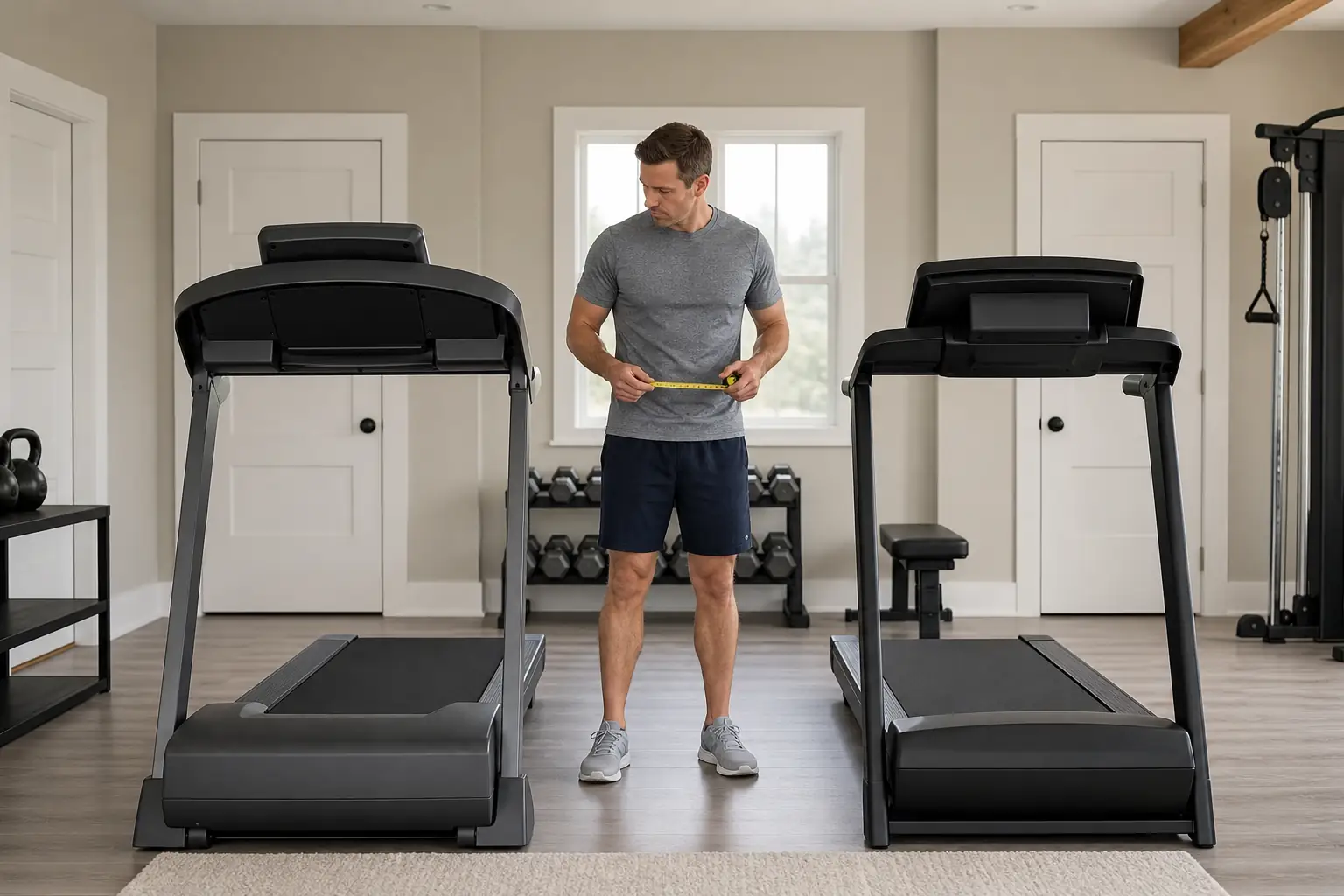
- Step-up height and size: lower decks leave more headroom; check the fit with the space calculator.
- Highlights: only rows where more (or a lower step-up) is clearly better are highlighted, and only when one model is ahead.
Our In-Depth Treadmill Comparisons
These match-ups have a full article with the verdict by use, owner feedback and our testing sources. The quick view opens them in the tool.
Share, Embed or Cite This Tool
Link to a comparison from a forum thread or your site: the page link keeps the models you picked. The embed code adds a card with a visible link.
Share this tool
Send it to a friend, a training partner or your followers. These buttons share the tool itself, not your results.
Embed this tool
Interactive widget: paste this HTML on your site and your visitors use the full tool on your page. It resizes itself and shows a visible credit link to FitGearHQ.
Simple link card for forums, newsletters and pages where scripts are not allowed:
Preview on your site
Cite this tool
- TitleTreadmill Comparison Tool
- PublisherFitGearHQ
- URLhttps://fitgearhq.com/treadmill-comparison-tool/
- Updated
Checklist Before You Buy
4 checks
Tap a number to check off that step.
- 01
Start with your must-havesBelt size, weight capacity and space rule models in or out before features.
- 02
Pick the right useSwitch the FitScore to running, walking or small spaces to see what changes.
- 03
Check warranty termsFrame, motor and parts warranties can differ a lot between brands.
- 04
Read the full reviewSpecs show fit; reviews add owner feedback on noise, assembly and support.
Common Mistakes to Avoid
Mistake 1Comparing on motor power alone
Instead: A strong motor on a short belt still limits running.
Mistake 2Ignoring folded size
Instead: A folding treadmill can still be too tall or heavy to store where you planned.
Mistake 3Treating every spec row as equal
Instead: Weight a row by how you train: incline matters for hill walks, speed for runs.
Mistake 4Forgetting subscription apps
Instead: Some consoles work best with a paid app; check what works without one.
The Bottom Line
- 60 in-stock treadmills, walking pads and manual treadmills.
- 15 specs from the Amazon listings, plus the FitScore for 12 uses.
- 19 in-depth comparisons linked when you pick one of those pairs.
- Shareable links keep your selection.
Frequently Asked Questions
Line up belt size, motor, speed, incline, weight capacity, size and warranty, then weigh them by how you train. The tool does this for you.
Belt size and weight capacity first, then motor and speed for running, incline for hill walking, and folded size for small rooms.
Each use weights the six FitScore categories differently, as in our Best guides.
Yes. Walking pads usually have shorter belts and lower top speeds, which the table shows.
From the Amazon listings, or the manufacturer when Amazon does not give the figure.
No. The comparison uses our data and FitScore method. Links to Amazon are affiliate links.